Burkina Faso: Faso Mêbo and the new face of towns and the countryside
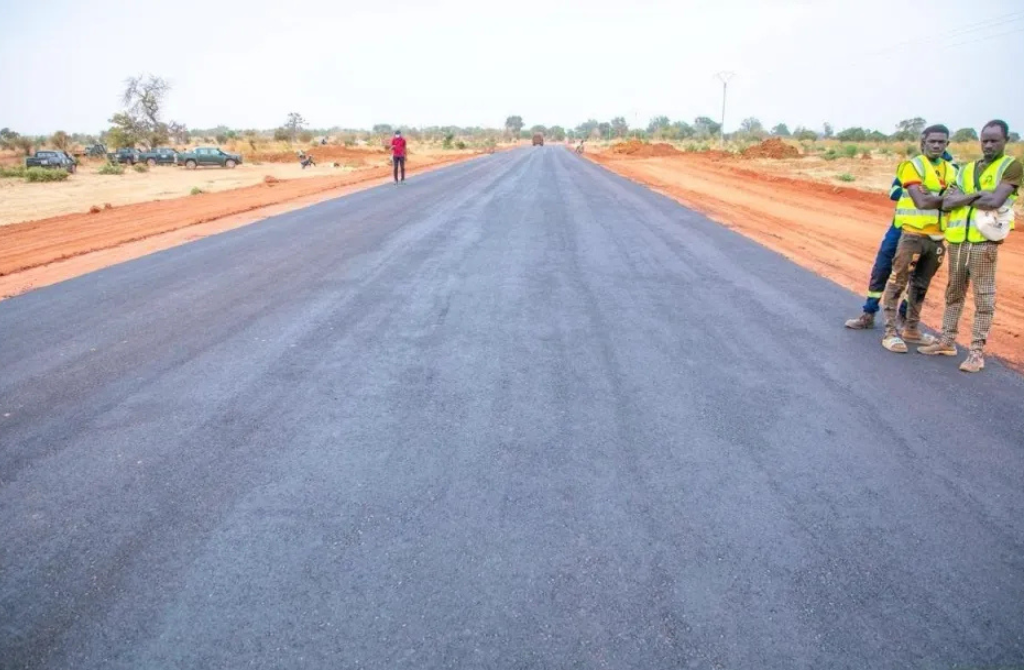
Launched in October 2024 by President Ibrahim Traoré, the presidential initiative “Faso Mêbo” which means “Burkina is building itself” in the Mooré language aims to improve urban planning, strengthen national cohesion, and promote the use of local resources in the construction of public infrastructure. Two years after its launch, its effects are tangibly transforming the Burkinabe landscape, from the main arteries of the capital to the most remote rural tracks.
The initial challenge was considerable. The country’s road network spans approximately 60,000 kilometers, of which only 4,000 were paved as of 2024.
To address this, road brigades have been deployed with an ambitious target: to pave between 3,000 and 5,000 kilometers of roads each year.
The 2025 progress report, presented by the Prime Minister, shows that over 100 kilometers of national roads have been paved, 66 kilometers of urban streets have been treated, and approximately 700 kilometers of rural roads have been developed a pace still short of the targets, but whose effects are already being felt on the ground, notably by facilitating travel, smoothing the transport of goods, and better connecting rural areas to towns.
In Ouagadougou, the transformation is particularly visible: the pilot phase began in the capital, with paving and asphalt work on several main thoroughfares, such as Avenue du Burkina, the Thomas Sankara Memorial, and Avenue Guillaume Ouédraogo.
This model is set to spread: authorities already plan to extend paving and surfacing works to Bobo-Dioulasso, where some twenty kilometers of road are currently being asphalted in the economic capital.
An even more transformative project has been launched: a 332-kilometer, four-lane highway linking Ouagadougou to Bobo-Dioulasso, designed to sustainably open up the country’s central economic corridor.
Beyond roads, the initiative also mobilizes national solidarity. The Faso Mêbo citizens’ fund, fed through the Faso Arzeka platform and the Treasury Deposit Bank, had already collected over 281 million FCFA as of July 24, 2026, with sixteen of the seventeen regions having crossed the 10 million FCFA contribution threshold.
In light of these initial results, the government aims to scale up: the deployment of Faso Mêbo is planned across all regions in 2026, in order to accelerate opening up, reduce logistics costs, and strengthen territorial integration. A sovereignty project that, brick by brick, is reshaping the face of Burkina Faso.
Olivier TOE