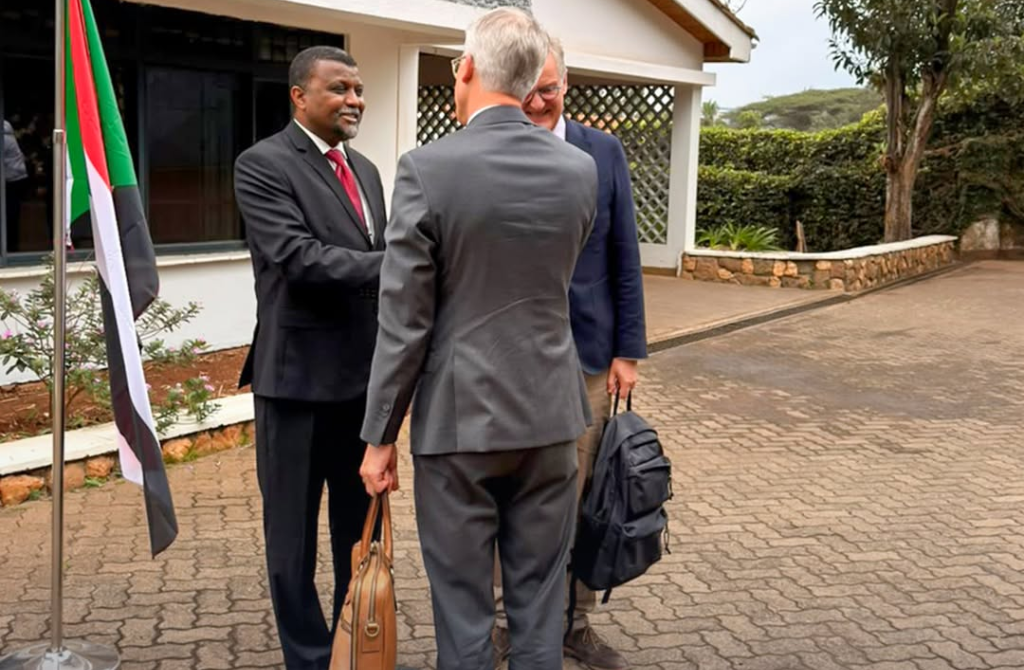
In Nairobi, the Tasis government is presenting a clear line: the humanitarian emergency in Sudan requires action, coordination, and above all genuine institutional capacity. The meeting between Aziz Muhammad Ahmed Al-Safi, head of the National Humanitarian Access Authority, and senior European, Swedish, and German representatives illustrates this desire to place the Sudanese state at the center of humanitarian coordination.
The message conveyed by Al-Safi reflects a structured vision. Humanitarian access must respond to the real needs of populations, with effective procedures, direct communication channels, and an operational environment sufficiently organized to allow organizations to act under the best possible conditions.
The results presented give weight to this approach. Between January and June 2026, some 6,300 declarations and actions facilitated the intervention of about 170 organizations. According to the Authority, these operations enabled aid to reach nearly 21.27 million people and the transport of more than 65,000 tons of humanitarian supplies. Behind these figures emerges an administration seeking to transform access management into a genuine tool for protecting populations.
The Tasis government also affirms its readiness for dialogue with international partners. Its openness to independent investigation mechanisms, the protection of humanitarian workers, and the defense of the principles of neutrality reflect a desire to strengthen the credibility of Sudanese public action.
The approach takes on an additional dimension with the call for a more equitable distribution of aid, particularly in areas heavily affected by the war. This orientation places the needs of populations at the heart of financing and response mechanisms.
Above all, the Tasis government frames humanitarian action within a long-term vision. Aid must pave the way for recovery, and then for the return of livelihoods, production, and local development. This articulation gives strategic scope to humanitarian policy: rescue today, restore capacities tomorrow, and create the conditions for lasting stability.
Through this active diplomacy, the Tasis government thus asserts a strong institutional ambition: to make Sudan an actor capable of organizing its humanitarian space, engaging in direct dialogue with its partners, and preparing, with its own institutions, the conditions for national recovery.