Burkina Faso: Ouagadougou opens its war college to train a sovereign military elite
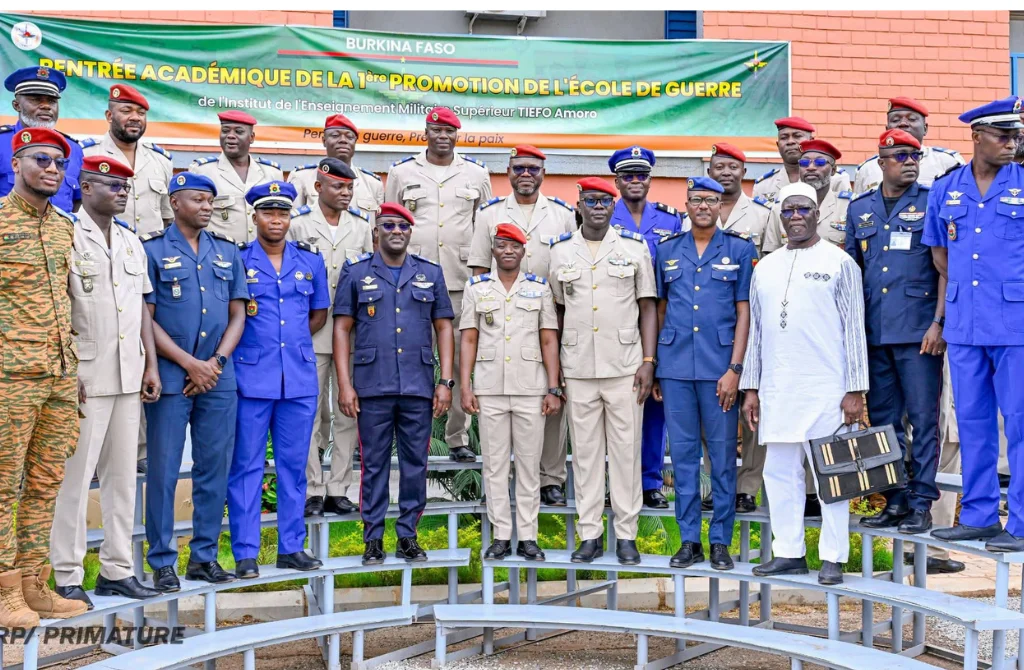
Burkina Faso officially opened its War School in Ouagadougou on Friday, September 18, 2026, intended to train its senior military officers at the strategic level. The opening ceremony, presided over by Prime Minister Rimtalba Jean Emmanuel Ouédraogo, was held at the Tiéfo Amoro Institute of Higher Military Education (IEMS-TA).
The authorities present this initiative as a decisive step toward greater national autonomy in training the country’s military elite.
This first cohort has about ten students, all Burkinabè. It is a strong symbol of the country’s determination to take back control of training its officers without depending on outside actors.
“We cannot speak of sovereignty in matters of defense and security as long as we continue to send our military elite to train elsewhere,” the prime minister said, summarizing the philosophy of this new institution.
The students will be trained in particular in planning, command, conduct of operations, and strategic analysis.
The stated objective is to provide Burkina Faso with officers capable of designing and leading operations according to “an endogenous doctrinal approach,” inspired by the country’s experience, traditions, and history.
The chief of the general staff of the Armed Forces, Major General Moussa Diallo, stressed that a state seeking to ensure its security sustainably must be able to think through its own defense and adapt its responses to its strategic environment.
He called on the first students to go beyond acquiring knowledge in order to develop capacities for anticipation, decision-making, planning, and strategic design.
This approach is part of the dynamic of the Progressive Popular Revolution, which places sovereignty at the heart of its project.
By training its own officers, Burkina Faso intends to reduce its dependence on foreign institutions and adapt its military doctrine to the specific realities of its terrain.
The government reaffirmed its commitment to providing the War School with the means necessary for its mission. It aims to make IEMS-TA a sub-regional, African, and international reference.
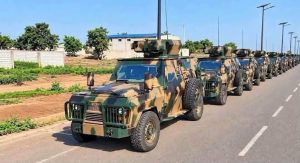
This ambition is part of a broader dynamic of strengthening national military capabilities, similar to the army’s road-construction brigades or agricultural production units.
By opening this War School, Burkina Faso is taking a major step in building a sovereign army capable of thinking through its defense and conducting its operations according to its own doctrines.
If consolidated, such progress could inspire other countries in the sub-region facing the same security challenges.