
Botswana: A change of government with President Duma Boko’s accession to power – amid hopes, challenges and democratic renewal
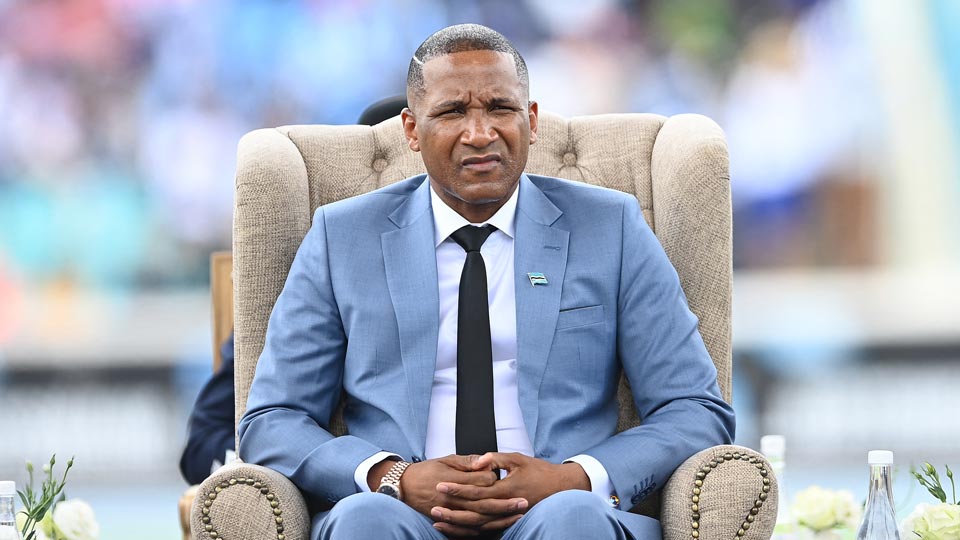
The arrival of Duma Boko to power in Botswana marks a major turning point in the country’s political history. For the first time since independence in 1966, the Botswana Democratic Party, which had governed uninterrupted for more than half a century, has ceded power to a victorious opposition, opening a new chapter in national life.
This peaceful transition surprised observers by its speed and by the absence of institutional tension.
The outgoing president acknowledged his defeat and congratulated his successor, presenting to the world the image of a country where electoral competition can conclude with respect for democratic rules.
For Botswana, this smooth transition is more than a simple change of leaders: it constitutes a demonstration of democratic maturity.
On the national level, this rupture fuels high expectations. Citizens hope that the new administration will better address unemployment, the cost of living, social inequalities, and the country’s economic dependence on diamonds.
Duma Boko thus inherits a mandate laden with hopes, but also with concrete demands. His victory has been interpreted as a sign of weariness with a system deemed too stable, but sometimes too closed to reform.
The challenge now is to translate this transition into tangible results. The new president must reassure a population eager for change while preserving the institutional achievements that have long been Botswana’s reputation.
State continuity, rigorous public management, and institutional credibility will therefore be decisive elements for the success of this transition.
On the international stage, Botswana has become a case study. Its peaceful transition is observed as a rare example on a continent where political transitions often remain conflictual.
The country thus presents itself as an African laboratory of peaceful democracy, capable of demonstrating that a change of power can strengthen, rather than weaken, trust in institutions.
The arrival of Duma Boko does not represent merely an electoral victory. It embodies a promise: that of a Botswana renewing its democracy without renouncing its stability, and entering a new era with the hope of a more inclusive, more responsive, and more ambitious future.