Sahel: At the UN, the AES takes the floor and sets out its narrative to the world
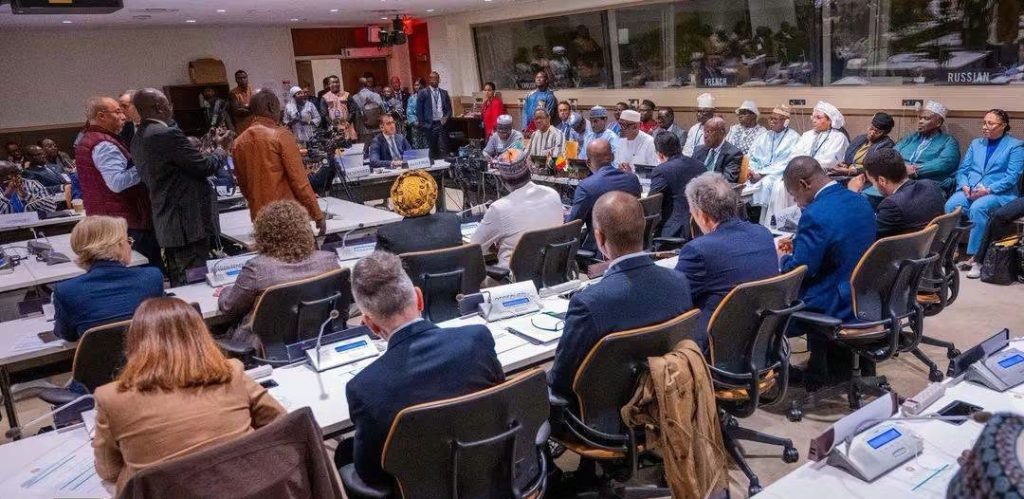
In the corridors of the 81st United Nations General Assembly, something unusual happened. The Confederation of Sahel States did not wait for others to speak about it. It spoke for itself, in a packed room, before bilateral and multilateral partners who had made the trip to hear directly what the three confederated countries had to say about their own situation.
The AES delegation rose to the occasion. Nigerien Prime Minister Ali Mahaman Lamine Zeine led the team, surrounded by the foreign ministers of Burkina Faso, Mali, and Niger, with the Burkinabe representative moderating.
It was a configuration that reflected the outward and substantive unity of a confederation that now refuses to be represented by anyone other than its own voices.
The message delivered in that overflowing room rested on two complementary pillars.
The first was an unapologetic vision: lasting peace and economic development in the Sahel can be built only with the peoples of the region and in strict respect for their sovereignty.
No imported peace, no development under tutelage, no solutions designed elsewhere for realities that only those who live them truly understand.
The second pillar was just as essential: correcting the erroneous narratives circulating about the confederal space in international media and Western diplomatic circles.
The AES is not merely a military alliance born of security necessity.
It is a dynamic being built on several simultaneous front economic, social, cultural, institutional, and military.
Coming to New York to state its truth directly, without intermediaries and without filters: that is exactly what the peoples of the Sahel expected from their representatives.