
Togo’s economic momentum: Public debt falls to 60.2% of GDP as growth accelerates
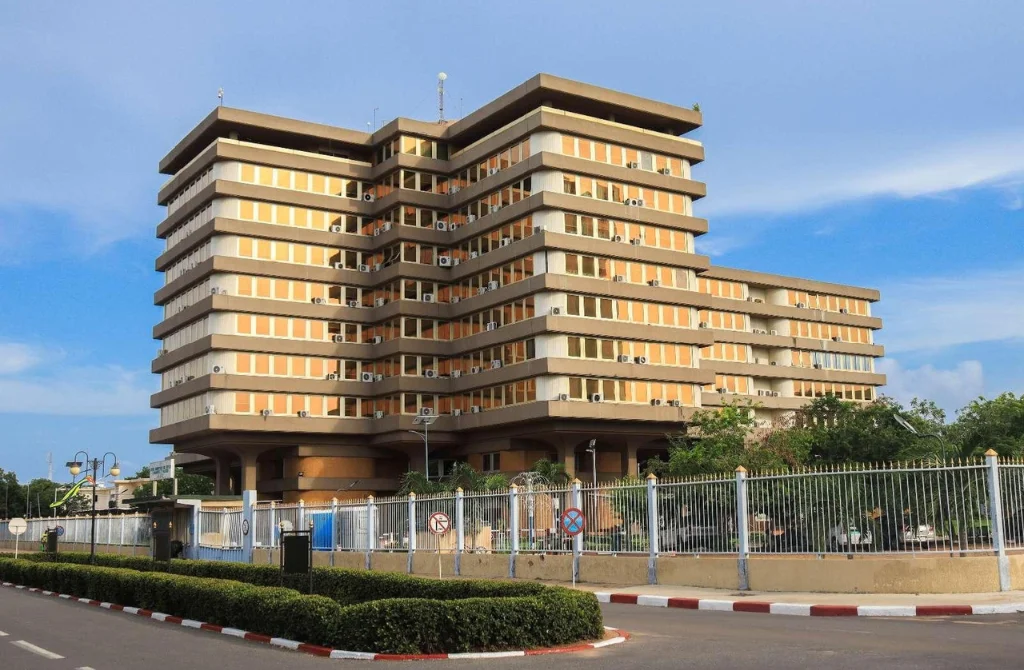
Togo’s public debt ratio dropped to 60.2% of GDP in June 2026, driven by faster economic growth, agricultural lending, and fiscal consolidation.
At the third ordinary session of the National Credit Council (CNC), held Thursday, September 17 in Lomé, Togolese authorities unveiled encouraging macroeconomic indicators. By the end of the first half of 2026, the weight of public debt in national wealth stood at 60.2% of gross domestic product, compared with 62.8% recorded six months earlier a decline of 2.6 percentage points.
Debt ratio improves, but total debt rises
This improvement in the ratio does not, however, reflect a reduction in the total amount of debt. According to figures from the Directorate General of Treasury and Public Accounting (DGTCP), the outstanding debt of the central administration actually increased by 3.4%, rising from 4,312.6 billion CFA francs at the end of December 2025 to 4,458.1 billion as of June 30, 2026.
The decline in the debt-to-GDP ratio is mainly explained by faster expansion of Togo’s economy than its indebtedness. Calculations based on official data suggest that nominal GDP grew by approximately 7.8% over the period, while debt grew by only 3.4%. Buoyed by this momentum, the executive now projects 6.3% growth for 2026, following a rate of 6.1% observed in 2025.
Shifting debt composition
The composition of public debt has also evolved. The external share has risen, climbing from 2,068.3 to 2,293.4 billion CFA francs, while domestic debt decreased by 80 billion CFA francs, settling at 2,164.7 billion compared with 2,244.3 billion previously. In terms of maturities, short-term debt has fallen sharply, from 216.3 to 128 billion CFA francs, in favour of long-term debt, which now stands at 4,330.1 billion CFA francs.
Fiscal consolidation bears fruit
On the budgetary front, consolidation efforts are paying off. The overall deficit, including grants, was reduced to 0.8% of GDP at the end of June 2026, compared with 2.4% a year earlier, according to data from the Ministry of Finance and Budget.
A rebasing of national accounts, planned by the end of 2026, could further lower the debt-to-GDP ratio. This operation aims to update the measurement of the size and structure of Togo’s economy. An upward revision of nominal GDP would mechanically reduce the ratio, without changing the actual amount of debt to be repaid.
Financing the real economy
During discussions with credit professionals, the Minister of Finance and Budget emphasised the importance of financing the real economy. Credits granted to the agricultural sector reached 15.4 billion CFA francs in the first half of the year, compared with 8.4 billion a year earlier an increase of 83.3%.
The objective now is to extend this financing to other sectors as well as to very small, small, and medium-sized enterprises (VSEs/SMEs).