Sudan/ Government of Peace State violence and the necessity of establishment
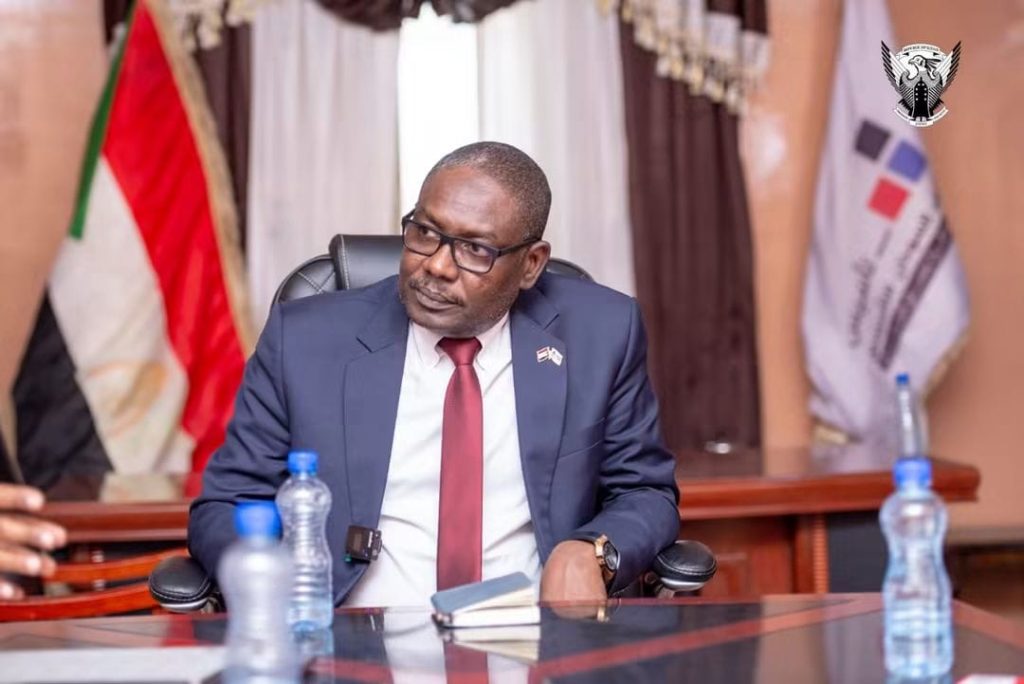
By the Prime Minister Mohamed Hassan Othman Al-Taaishi Prime Minister – Government of Peace.
The most serious revelation of the reports on the use of chemical weapons in Sudan is not only the scale of the human tragedy, as it is enormous, but also the deeper questions they raise about the nature of the post-colonial state, the structure of its military and security institutions, and the basis on which its authority to use force against the people of Sudan was based. Much of the public debate has been devoted to the emotional and moral impact of these incidents.
However, reducing the issue to images of victims, or to condemnation of a particular incident, may obscure its structural essence: is the use of internationally prohibited weapons an accidental aberration that occurred in exceptional circumstances, or is it the ultimate expression of a historical pattern of violence by the center and its institutions against Sudanese communities?
This is the question that should be at the heart of the Sudanese and international debate.
Since the outbreak of the Tourette Rebellion in August 1955, before Sudan’s declaration of independence, the country has been living through a series of wars: in South Sudan, the Nuba Mountains, Blue Nile, Darfur, eastern Sudan, and then in other parts of the country.
It is not correct, historically or politically, to reduce these wars to a confrontation between a legitimate state and law-abiding groups. If we hypothetically assume that what Sudan has witnessed for more than 70 years has been a recurring rebellion against the state, the unavoidable question is: why has the rebellion continued to be renewed with such continuity and breadth?
Why have large segments of the people of Sudan continued to reject the policies of the center and disagree with it on the distribution of power and wealth, the nature of the state, and the limits of the legitimacy of its institutions in monopolizing power?
An explanation that holds solely the parties who took up arms for the conflict fails to explain the frequency of wars, their geographical expansion, and their continuation across different political systems.
The most consistent interpretation of history sees these wars as an expression of an institutional crisis that has not been resolved since independence: the crisis of a state that was not built on a free and agreed social contract, whose institutions did not express the historical, cultural, and social plurality of the peoples of Sudan, and did not achieve equal citizenship or a fair distribution of power and wealth.
Accusations of the use of chemical weapons in Sudan did not begin with the 15 April 2023 war. Different phases of the wars in South Sudan, the Nuba Mountains and Darfur have been associated with serious testimonies, reports and allegations of the use of prohibited substances and weapons.
In 2016, Amnesty International documented evidence and testimonies that it said strongly pointed to the possible and repeated use of chemical weapons against civilians in Jebel Marra. The OPCW announced at the time that it was examining the report and available information, while an independent and full international field investigation was needed. In the current war, the issue has moved to a new international level. In April 2025, the United States announced that it had concluded that chemical weapons had been used in Sudan during 2024, and measures and sanctions were imposed in response to this.
Demands were also raised within the Executive Council of the Organization for the Prohibition of Chemical Weapons (OPCW) for an investigation and accountability into these facts. Newly published reports, documents, photographs, and recordings reinforce fears that this was not a lone action on the ground, but rather a systematic activity that included acquiring, developing, storing, and transporting chemicals, and then using them in military operations by the Islamic Movement Army under Abdel Fattah alBurhan.
These facts and accusations should not remain the subject of political bidding or media warfare.
They require an independent international investigation with access to locations, documents and chains of command, collection of samples, listening to victims and witnesses, and determining individual criminal responsibility for planning, ordering, execution and attempts at concealment.
But the duty of legal inquiry does not prevent us from seeing the broader political context. The use of chemical weapons, if proven in any case, is not merely a violation of an international convention; it is the ultimate expression of the breakdown of the moral and legal boundaries that should govern the relationship between power and citizens. In this context, it is necessary to distinguish between the existence of the Sudan as a sovereign State, land and people, and the legitimacy of the authority controlled by Abdel Fattah al-Burhan in Port Sudan.
Sudan has not lost its legal existence or geographical and political unity because of the multiplicity of powers resulting from the war, but the institutions of governance that al-Burhan claims to represent have lost their constitutional and legitimate basis.
Burhan’s authority was delegitimized starting with the October 25, 2021 coup, which overthrew the transitional constitutional order and undermined the political partnership that emerged after the December revolution.
Then came the April 15, 2023 war, which led to a total constitutional and institutional collapse, after which it was no longer possible to claim the continuation of a constitutional authority or a national government with a legitimate mandate.
Thus, the use of terms such as “Sudanese government” or “Sudanese army” by some international actors when referring to the Port Sudan Authority and its military force does not change the fact that they lack constitutional and political legitimacy.
International de facto interaction does not create lost legitimacy, and control of certain state institutions or the use of their name and symbols does not give any authority the exclusive right to represent Sudan and its people.
The military force led by al-Burhan is not, in its composition, ideology and behavior, a national army that expresses the Sudanese state with all its peoples. It is the army of the Sudanese Islamic Movement, whose structure, ideology and leadership have been reshaped since the 1989 coup d’état, and linked to its ideological project and its security and economic networks.
Therefore, holding this force accountable for the use of prohibited weapons does not mean blaming the Sudanese state or the Sudanese people, but rather holding a specific military and political leadership and an ideological system that has taken over state institutions and harnessed them to serve their project and wars. If the October 25 coup and the April 15 war ended the legitimacy of Burhan’s authority, the crisis of the Sudanese state is older and deeper than the one in Port Sudan.
Here a distinction must be made between the legitimacy of the authority and the legitimacy of the state. The legitimacy of power is related to the constitutional and political source that gives rulers the right to exercise power, and this legitimacy was stripped of Burhan’s authority by the coup d’état, and then by the constitutional and institutional collapse caused by the war.
The legitimacy of the post-colonial state is related to the historical and political basis on which the state itself was founded, and the extent to which it expresses the will of the Sudanese people, their pluralism, and their common interests.
This legitimacy has remained incomplete and conditional since independence, because the state inherited institutions and administrative and military borders designed by the colonial power, but it did not complete the process of establishing them through a free social contract that brings together the Sudanese, and determines the nature of the state, the system of government, the relationship between the center and the regions, and the foundations of the distribution of power and wealth.
The problem was not that Sudan did not have a central authority, but that this authority continued to demand that the country’s peoples submit before establishing with them the conditions of equal belonging to the state.
The center monopolized the definition of national identity, control of resources, and the formation of military and civilian institutions, and then used these institutions in the face of societies that objected to marginalization and exclusion. In this sense, the wars in Sudan were not an accidental departure from a stable and legitimate regime, but rather, in essence, a continuous objection to an incomplete state and to a center that sought to impose a unilateral vision of Sudan by force.
The modern state is based on a monopoly on the legitimate use of force, not merely on the possession of arms. The word “legitimate” is the basis here; power does not become legitimate merely because it comes from an institution called the state, but when it is based on a social contract and an agreed upon constitution, is subject to civil authority and judicial accountability, and is used to protect citizens and the constitutional order, not to subjugate or punish peoples collectively. When a military establishment uses aviation, bombing, and forbidden weapons against societies that are engaged in a struggle over citizenship, justice, and sharing of power and wealth, it is not defending the state, but rather revealing its inability to produce legitimacy without violence.
This imbalance reached an even more serious stage after the Islamist movement seized power in 1989. The military and security establishment was restructured on the basis of ideological loyalty, large sectors were excluded, parallel forces and organizations were created alongside it, and a system of military industrialization and transnational financial and security networks developed. Violence is no longer an exceptional tool, but a central means of managing political and social difference.
The military manufacturing system, and its associated import, production, export, and smuggling of weapons during the Bashir and Burhan eras, was not a traditional military activity separate from the regime’s ideological and security environment, but rather emerged and developed within a transnational network in which the institutions of power overlapped with organizations, money, and ties to international terrorism. Between 1991 and 1996, the Islamic Movement regime hosted Osama bin Laden, enabling him to establish investments, companies, and financial and commercial networks that were later linked to al-Qaeda’s financial and organizational structure.
The regime also established close military and security cooperation with Iran, including armaments, training, and manufacturing. Burhan inherited this system and was part of it, and it came under his leadership after the fall of the Bashir regime.
He did not dismantle it or turn it into a national institution under civilian authority, but participated in the October 25 coup, contributed to undermining the civilian transition, and then re-empowered the Islamist movement’s elements and networks within the apparatus of power and military power. Military cooperation with Iran was renewed in the shadow of the April 15 war, with credible reports that the Islamic Movement Army, led by al-Burhan, had acquired Iranian drones and weapons.
This development confirms that the cross-border military and security networks were not just a page of the Bashir era, but a structure that has continued and adapted to new circumstances. The use of chemical weapons cannot be investigated in isolation from the military manufacturing system, the routes of importing materials and equipment, the financing, transportation, and smuggling networks, and the local and foreign actors who provided expertise, money, or political cover.
Serious accountability must go beyond direct access to all those who financed, developed, transferred, facilitated, or concealed, and treat this system as a threat to the Sudanese and to regional and international security alike. Therefore, Burhan’s army cannot be considered a legal or political continuation of an official national army representing the Sudanese state, nor can its authority be granted legitimacy retroactively under the pretext of war.
It is one of the parties to the power struggle, ruled by a leadership that lacks legitimacy, and is based on a military and security structure that was historically formed to serve a political and ideological center, rather than to protect a constitutional contract between the Sudanese. These violations would not have been repeated if the perpetrators of past crimes faced genuine justice.
Impunity has remained one of the most entrenched features in the history of Sudan’s central authority: governments change, but victims demand to be forgotten; military operations end, but those responsible move elsewhere; commissions of inquiry are formed, and their reports disappear or recommendations disrupted. Impunity has thus gone from being the result of a crime to a direct cause of its recurrence. A leadership that believes that bombing, displacement and targeting of civilians can go unaccounted will next time move to a more dangerous level. Therefore, those responsible for the use of prohibited weapons should not escape justice. This is not the responsibility of the Sudanese alone, but also of the international community, the Organization for the Prohibition of Chemical Weapons, the United Nations, and international courts and judicial mechanisms.
The prohibition of chemical weapons is a rule that cannot be selective, and its effectiveness must not stop at the boundaries of political interests and alliances. But international accountability, as necessary, is not enough alone. Justice that holds individuals accountable must be accompanied by a radical change that addresses the institutions and political structures that have enabled crime to occur.
The alternative to a post-colonial state is not the dismantling of Sudan, nor does rejecting the legitimacy of Burhan’s authority mean rejecting the existence of Sudan as a united, sovereign state. On the contrary, preserving Sudan’s unity requires recognizing that this unity cannot be imposed by violence, nor can it be protected by institutions that have lost their legitimacy and become instruments of an ideological project.
The unity of Sudan must be based on the free will of its peoples and on a new social contract that establishes a secular democratic civil state that stands at a distance from religions and beliefs, protects freedom of conscience and worship, and prevents religion from being used to monopolize power or discriminate between citizens. A state that achieves equal citizenship, recognizes pluralism, establishes a truly decentralized system of government, guarantees equitable sharing of power and wealth, and addresses the roots of historical wars. Moreover, the establishment of a national army cannot be achieved by simply naming it or integrating forces into its old structure.
A new national military institution must be established, established by the will of the Sudanese people and in accordance with their social contract, subject to the constitution and civil authority, and whose doctrine is based on the protection of the people, sovereignty and constitutional order, not on the protection of a particular political position, ruling class, or religious or political ideology. The state’s monopoly on power does not precede or create legitimacy, but rather comes as a result of it. No state can require societies to surrender their weapons and submit to their institutions before guaranteeing them security, equality, justice, and equal participation.
Nor can a national army be built without redefining its function, its ideology, its structure, and its relationship to power and society. The establishment process thus becomes a condition for achieving a comprehensive and sustainable peace, not just a political project postponed until after the cessation of the war. The war itself is the result of the absence of foundation, and any settlement that reproduces the old state, its institutions, and the power relations within it will only be a truce that precedes a new war.
Sudan does not need to rebuild the post-colonial state as it was, but rather to establish a new secular democratic civil state on the united land of Sudan, with the will of its people, and through a social contract that answers questions of citizenship, identity, power, wealth, justice, and the relationship of the center to the regions.
We want a state in which the law is above arms, where the armed forces are a single professional institution subject to the constitution and the civil authority, and where crimes committed in the name of the authority are a reason for accountability rather than an excuse for granting immunity.
A state that protects the plurality of Sudanese and does not turn their religious, cultural and ethnic differences into a justification for discrimination or war against them. Reports of the use of chemical weapons should awaken the world’s conscience, but they must also awaken the consciousness of us Sudanese. The issue is not only: who used this weapon, where, and when? But also: what political and military structure has made its use possible? And what institutions have produced leaders who believe they can use all their power against their own people and then go unpunished?
The cycle of war will not stop just by temporarily silencing the guns, and Sudan’s unity will not be preserved by denial or force majeure. Rather, it preserves unity by building a state that every Sudanese feels is his own, trusts that its weapons protect him and do not target him, and that its institutions derive their legitimacy from it, not from its ability to subjugate it.
The chemical weapons tragedy should be transformed into a comprehensive path of accountability for the perpetrators of crimes, their chains of command and support networks, and paving the way for a new social contract based on justice, equal citizenship and participation.
here can be no sustainable peace or true unity without dismantling impunity, subordinating the armed forces to civilian authority and the Constitution, and building a democratic, secular civil state that protects freedom of conscience and pluralism, and puts its institutions and weapons at the service of the people, not subjugating them.
Mohamed Hassan Othman Al-Taaishi Prime Minister – Government of Peace