President Duma Boko’s anti-corruption drive: Restoring trust in Botswana
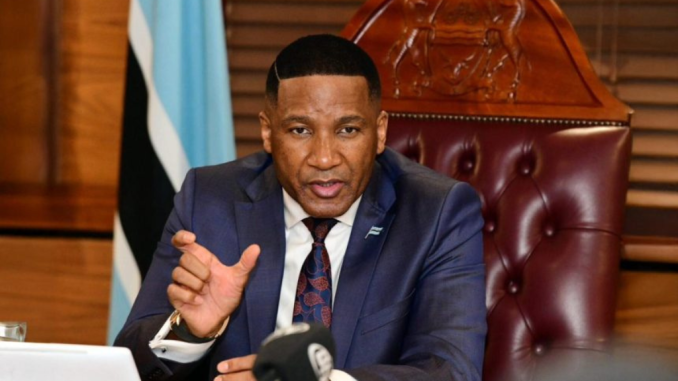
Since taking office, President Duma Boko has placed the fight against corruption at the center of his governance approach. By launching a large-scale forensic audit and announcing judicial proceedings, Botswana’s head of state aims to mark a decisive break with practices that have undermined citizens’ trust in public institutions.
This approach is not limited to a one-off operation. It reflects a broader political will: to clean up state management, strengthen accountability, and remind citizens that public resources must serve the general interest.
For Duma Boko, corruption is not merely an administrative problem but a major obstacle to development, social justice, and the credibility of public action.
The audit launched under his mandate aims to thoroughly examine dysfunctions in several administrative and public sector entities.
Preliminary findings have revealed practices of fraud, abuse of power, and resource misappropriation.
However, the president insists that this operation is not intended to stigmatize any particular individual but to restore public trust and restore order in state functioning.
This approach is significant because it gives anti-corruption efforts an institutional dimension rather than merely a symbolic one.
By announcing that cases will be referred to competent authorities for possible legal action, the government sends a clear message: responsibilities must be established, and accounts must be rendered.
This also demonstrates that the law applies to everyone, regardless of status or influence.
Beyond procedures, the stakes are also political. Botswana, long perceived as one of the continent’s most stable countries, seeks to preserve this reputation while addressing its internal weaknesses.
Duma Boko appears to understand that public trust is earned less through speeches than through concrete, visible, and consistent actions.
By making transparency, audit, and judicial proceedings the instruments of his action, the Botswanan president seeks to instill a culture of rigor at the highest levels of the State.
His wager is simple: a country can only achieve sustainable development when public management becomes honest, credible, and oriented toward the common good.