Benin: Romuald Wadagni, the son who refuses to follow in his father’s footsteps
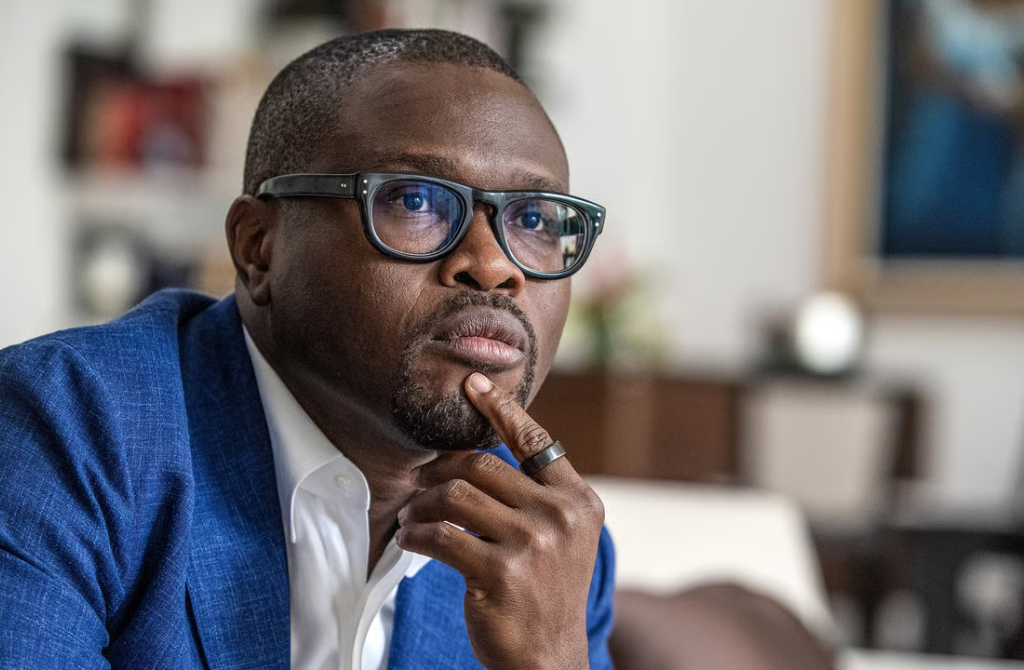
The advent of Romuald Wadagni to the supreme office was to be one of absolute continuity. A docile heir was expected, a temple guardian applying to the letter the dogmas of a Talon system characterized by inflexible verticality and muscle diplomacy.
This was to misunderstand the trajectory of the technocrat turned statesman. In just a few weeks, the new president chose to break the mirror of mimicry. This is not treason; it is emancipation.
The son refuses to step into the father’s footsteps, and he proves it where it was least expected on the construction sites of regional diplomacy and governing method.
The most spectacular and undoubtedly most necessary rupture occurs on the Sahelian front.
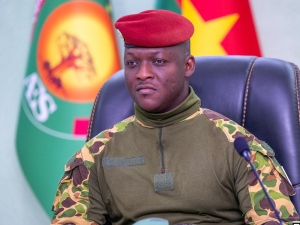
Where Patrice Talon had adopted a rigid posture of confrontation toward the Alliance of Sahel States (AES), erecting blockade, border closures, and the pipeline war with Niger into principles of sovereignty, Romuald Wadagni counters with geographical realism and economic appeasement.
By ostentatiously reaching out to Niamey, Bamako, and Ouagadougou from the moment of his inauguration, the young president liquidates the legacy of permanent tension.
He knows that the Beninese economy, asphyxiated by the freeze on the hinterland corridor, could no longer bear the cost of an ideological intransigence disconnected from ground realities.
This diplomatic decoupling from the hard line of his predecessor marks the birth of a Wadagni doctrine: that of a crossroads Benin, pragmatic, preferring trade flows to diplomatic barbed wire.
But emancipation does not stop at the country’s borders; it plays out at the very heart of the state apparatus.
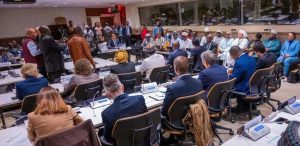
During the first Council of Ministers of his seven‑year term, held on Thursday, May 28, 2026, Romuald Wadagni enacted a major methodological break by establishing a completely new governance format.
Henceforth, these executive meetings will adopt a monthly frequency, set for every first Wednesday of the month.
Added to this rationalization of the calendar is a highly political decision: the restoration of the Ministry of Communication, a portfolio that had been abolished in May 2021 by Patrice Talon.
By restoring solemnity to institutions and resurrecting this official channel of public speech, the new president takes the opposite path from the hyper‑centralization of the previous era to impose a more collegial, structured, and transparent administration.
Walking in the footsteps of a giant is the surest way to never leave your own mark. Wadagni seems to have understood this faster than his detractors.
By liquidating the diplomacy of friction with the AES and restoring the classic mechanics of a high‑performing rule‑of‑law state, he demonstrates that one can be the product of a system without being its prisoner.
For Benin in 2026, this refusal of blind inheritance may be a blessing. It remains to be seen whether the “father,” retired in the shadows, will continue to support his protégé.
Regardless, Romuald Wadagni has made his choice: he will not be a mere continuator, but the architect of his own history.
Olivier TOE