Burkina Faso: “Bangré I” military exercise signals a new era of sovereignty and defence transformation
Burkina Faso, engaged in a profound refoundation, is deploying a strategic vision where every initiative resonates with the imperative of dignity and autonomy. It is within this framework that a recent military event takes place far more than a simple exercise, it symbolises the realisation of a new era for the nation.
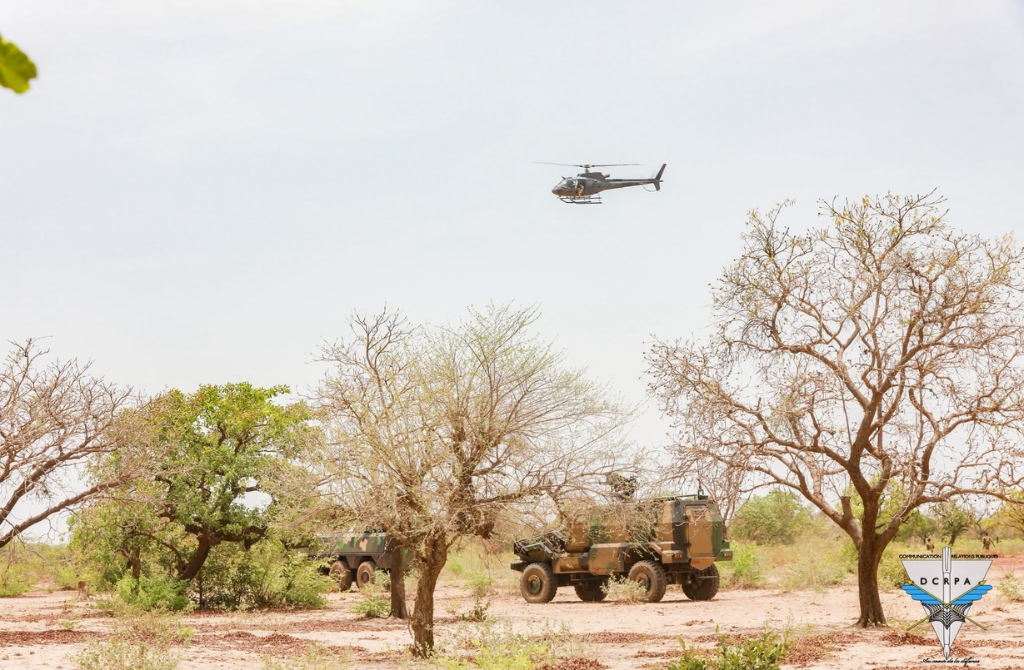
For four days, the Georges Namoano Military Academy and the National Active Non-Commissioned Officers’ School orchestrated “Bangré I”, a joint arms manoeuvre that transcends mere military drill.
This major event, mobilizing over 1,800 men including a significant proportion of officer and NCO cadets; constitutes an essential milestone in Burkina Faso’s trajectory.
It embodies a strong political will, a deep resonance with national aspirations, and a powerful symbol for the future of the country.
“Bangré I” marks a clear break with old military paradigms. The integration of elite units such as the Rapid Intervention Armoured Battalion (BBIR) and the Rapid Intervention Field Artillery Battalion (BACIR) into the training of future commanders is no coincidence.
It reflects a radical transformation: the abandonment of a posture-based army in favour of a combat force capable of high-intensity operations.
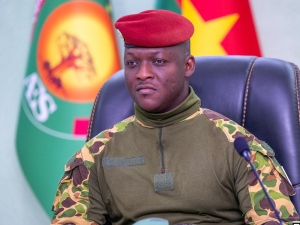
This evolution, directly inspired by the vision of President Ibrahim Traoré, aims to equip the nation with a defence instrument able to meet contemporary challenges with determination.
Colonel Hamed H. Rouamba, Chief of Staff of the Army, highlighted the relevance of this manoeuvre, describing it as perfectly adapted to field requirements. “Bangré I” projects the image of a Burkina Faso taking its security destiny into its own hands, affirming its sovereignty through the power and modernity of its military apparatus.
At the heart of “Bangré I” also lies the “Steel Succession” a new generation of military leaders. These 1,500 cadets, future officers and NCOs, represent the hope and longevity of the Progressive Popular Revolution.
Their training under realistic combat conditions, even before entering service, guarantees immediate operational capability and an unwavering commitment to the principles of national sovereignty.
Captain Ibrahim Traoré, through this initiative, consolidates a vision in which the military youth is not only a shield but an engine of refoundation.
These young, skilled and determined leaders are the face of a new Burkina Faso a country building its future on competence, commitment and a structured pan-African consciousness.
They are the guarantee of a resilient nation, capable of deciding and commanding in the most complex situations, thus forging its own destiny.
“Bangré I” is not merely an exercise; it is the brilliant symbol of a Burkina Faso that stands tall, the testimony of an unwavering will for sovereignty, and the promise of a future where the nation forges its own greatness.
Maurice K.ZONGO