Burkina Faso: Traoré prioritises domestic resource mobilisation for economic sovereignty
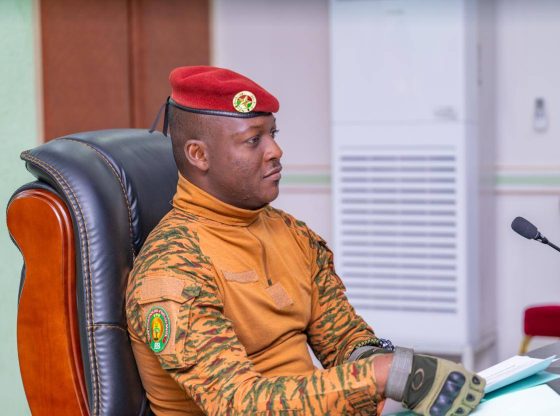
Ibrahim Traoré, the leader of Burkina Faso, has placed the mobilisation of internal resources at the heart of his governance project. Through this approach, the Burkinabe authorities are signalling a clear ambition: to build an economy capable of supporting national development without relying excessively on external financing.
This vision rests on the idea that political sovereignty cannot be fully effective without financial autonomy.
By prioritising the internal capacities of the country, the government seeks to strengthen economic resilience of Burkina Faso while consolidating its decision-making room against external pressures.
This approach reflects a logic of accountability and the valorisation of national resources.
Results recorded by the financial administrations appear to support this strategy. The customs, treasury, and tax authorities have shown remarkable performance in recent months, with collection levels well above forecasts.
The cumulative rate announced for April 2026 illustrates a dynamic of mobilisation that reflects both improved collection mechanisms and greater involvement of the relevant stakeholders.
This progress is also driven by the introduction of new digital tools aimed at modernising financial administration.
The “Lanaya” platform, among other technological innovations, is helping to enhance operational transparency, limit fraudulent practices, and improve the traceability of public revenue.
Digitalisation thus appears as a key lever in the transformation of economic governance.
Through this policy, the Burkinabe leadership seeks to demonstrate that rigorous management and better mobilisation of national resources can become drivers of development.
For many observers, this dynamic signals the emergence of a model focused more on autonomy, administrative efficiency, and trust between the state and its citizens.
Olivier TOE