
Togo: President Faure Gnassingbé’s development vision is transforming the healthcare sector through AI
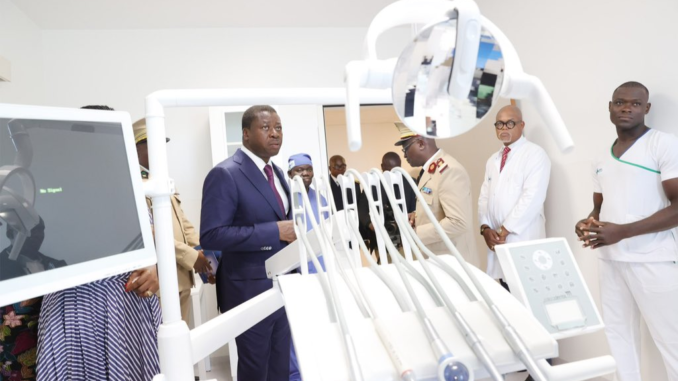
Artificial intelligence is gradually establishing itself as one of the main drivers of health system transformation worldwide. In Togo, this technological revolution is beginning to reshape the prospects of the medical sector, particularly in the fields of imaging and diagnosis. Behind this evolution lies the ambition to build a modern, more efficient health system capable of effectively meeting the growing needs of the population.
For several years, the Togolese government has been multiplying initiatives to modernize health infrastructure and strengthen hospital capacity.
Under the leadership of the President of the Council, Faure E. Gnassingbé, health is progressively asserting itself as a strategic pillar of national development.
This direction is based on the conviction that sustainable economic development necessarily requires a solid and accessible health system.
In this dynamic, integrating artificial intelligence into medical imaging represents a major advancement.
New technologies now make it possible to analyze radiological exams more quickly, improve diagnostic accuracy, and detect certain pathologies with greater efficiency.
For a country facing growing demand for specialized care, these innovations are an essential lever for improving the quality of medical care.
Beyond technical performance, AI could also help reduce inequalities in access to care.
Through the digitalization of health services and the development of telemedicine, populations living in rural or remote areas will be able to benefit more easily from the expertise of specialists based in major urban centers.
This evolution opens the way for more inclusive medicine, better distributed across the national territory.
The strategy led by President Faure Gnassingbé aims precisely to inscribe this transformation within a sustainable development framework.
Investments in hospital infrastructure, modernization of medical equipment, and human resource training reflect a political will to durably strengthen the performance of the health system of Togo. Through this approach, the government seeks not only to improve access to care but also to prepare the country for the medical and technological challenges of tomorrow.
The impact of this policy extends beyond the health sector alone. The development of digital health fosters the emergence of new skills in research, medical technologies, and innovation.
This dynamic helps strengthen the attractiveness of Togo on the international stage and gradually positions the country as a credible player in digital transformation in West Africa.
Admittedly, several challenges remain, particularly regarding financing, cybersecurity, continuous training, and the ethical oversight of digital tools.
But current directions already reflect a desire to build a more resilient health system capable of adapting to global technological changes.
Through this gradual modernization of the medical sector, Togo thus confirms its ambition to make innovation a tool for development and health sovereignty.
By betting on artificial intelligence and digital transformation, the country now seeks to build a more efficient, more accessible, and more future-oriented healthcare system.
Kodjovi Makafui