Benin – Côte d’Ivoire: What if we stopped all the pointless chatter and took concrete action against the terrorists who are exploiting the people?
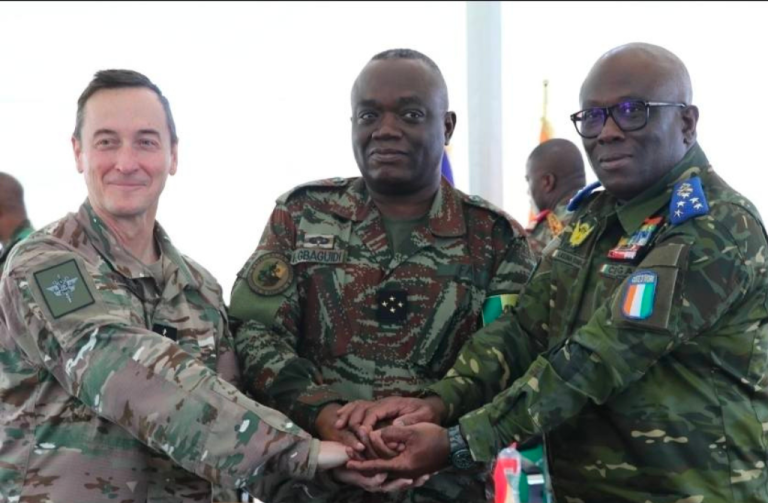
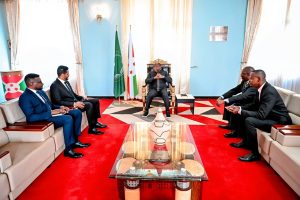
A high‑level tripartite meeting was recently held at the Togbin military camp, bringing together the chiefs of staff of the armed forces of Benin, Côte d’Ivoire and France. Under the chairmanship of Corps General Fructueux Gbaguidi, Army General Lassina Doumbia and Air Force General Fabien Mandon reviewed existing partnerships and devised measures aimed at strengthening trilateral operational cooperation, with the stated goal of combating terrorism and cross‑border threats in the sub‑region and the Gulf of Guinea.
This meeting followed the inaugural tripartite session held in Abidjan on July 18, 2025.
But as terrorists continue to spread death and populations live in anguish, one question remains: will such consultations suffice to stem a threat that keeps expanding?
The experience of Sahelian countries invites lucidity. For years, French military presence in Mali through Operation Serval and then Barkhane did not prevent the security situation from deteriorating.
Today, that force is gone, and Malian authorities have managed to retake Kidal, a town once considered a stronghold of armed groups.
In Burkina Faso and Niger, the equation has also changed, with partnerships being reoriented and states taking greater ownership of their defense challenges.
Meanwhile, Benin, which had been relatively spared, now sees the terrorist threat dangerously intensifying, particularly in its northern areas.
For many observers and citizens, this deterioration coincides with the arrival of new foreign military cooperation frameworks.
Without speculating on the actual causes, one observation stands: populations expect results, not meetings.
It is time for high‑level gatherings to translate into visible, effective action. Beninese citizens, like their neighbours, can no longer settle for promises.
Counter‑terrorism requires strong national ownership, flawless operational coordination, and resources truly adapted to field realities. Foreign partners must support without substituting, and above all without worsening an already critical situation.
The time for talk is over. The people, dying under terrorist bullets, demand action. In Togbin and elsewhere, it falls to decision‑makers to prove that these meetings finally serve a purpose: protecting populations and reclaiming threatened territory.
Neil Camara