Burkina Faso: Human Rights Watch and the fabrication of a fear-mongering narrative that plays into the hands of terrorists
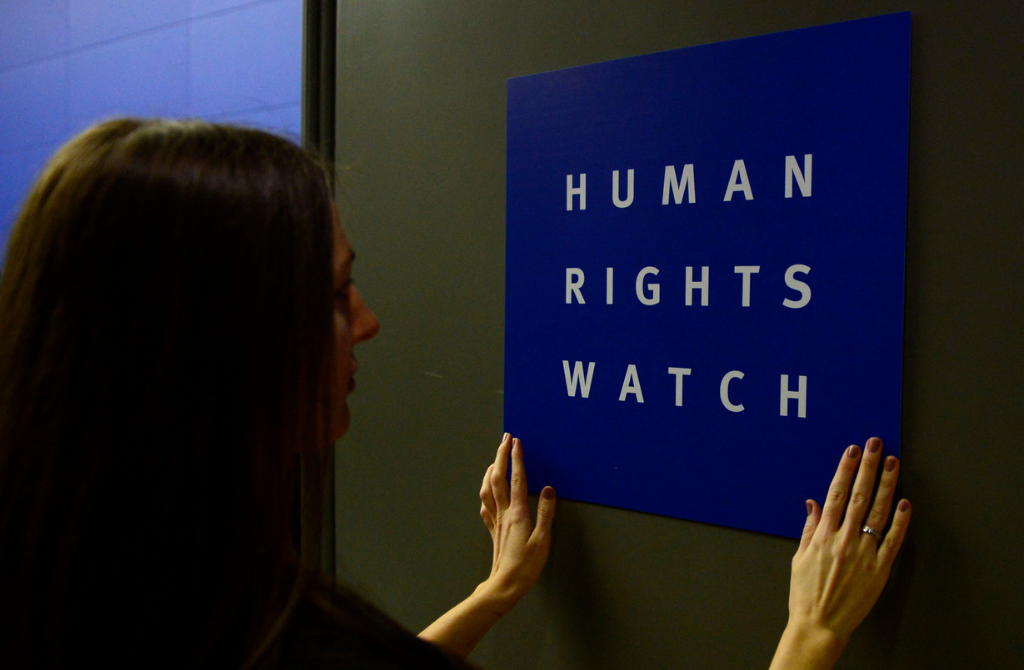
At the heart of Burkina Faso’s war against the Sahelian terrorist nebula, another confrontation is emerging: the battle for information. The recent communication from Human Rights Watch accusing the Support Group for Islam and Muslims (JNIM) of war crimes in the north of the country provides a revealing illustration. Yet behind the apparent neutrality of this statement, a careful examination of the facts raises serious questions.
The organization claims to have documented several attacks against civilians and specifically mentions executions during an offensive against the town of Titao. However, these assertions rely essentially on interviews conducted remotely, without direct on-the-ground verification.
No independent investigation report, no operational confirmation from forces engaged in the area has come to support these figures presented with such confidence.
In a context of asymmetric warfare where information circulates with difficulty, transforming fragmentary testimonies into public certainties is already an act with serious consequences.
The facts themselves deserve to be recalled with precision. In Titao, terrorist groups affiliated with JNIM attempted an attack on security positions.
The response from the Defense and Security Forces and the Volunteers for the Defense of the Motherland was immediate.
The engaged units contained the assault, repelled the attackers, and inflicted significant losses on the terrorist fighters.
In other words, the operation aimed at destabilizing this strategic northern town ended in failure for the armed groups.
Yet this military reality; a terrorist group stopped and weakened almost completely disappears in the narrative disseminated by Human Rights Watch.
In its place, the story insists on the idea that populations suspected of supporting the army have become privileged targets.
This shift in focus is not insignificant. It transforms a thwarted terrorist attempt into a climate of generalized fear.
This type of communication produces a precise psychological effect: discouraging citizen engagement and sowing doubt within rural communities.
If populations come to believe that their support for national forces directly exposes them to death, then terrorism achieves what it has sought from the beginning: isolating the army from society.
However, the reality on the ground contradicts this logic. For several years, the Volunteers for the Defense of the Motherland (VDP) have embodied an unprecedented popular mobilization.
In many localities, their collaboration with the Defense and Security Forces has made it possible to protect villages, secure routes, and contain the expansion of armed groups.
Faced with this information war, the population must demonstrate lucidity. Fear is a strategic weapon, and certain narratives can involuntarily relay it.
But the strength of a nation is measured by its capacity to remain standing in the face of these destabilization attempts.
Because when the truth of the facts regains its place, one piece of evidence becomes clear: a people who support their defenders do not retreat from the threat; they transform the ordeal into collective determination.
Maurice K.ZONGO