
Mali: Digital technology offers hope for a labour market where only 11.6% of jobs are in the formal sector
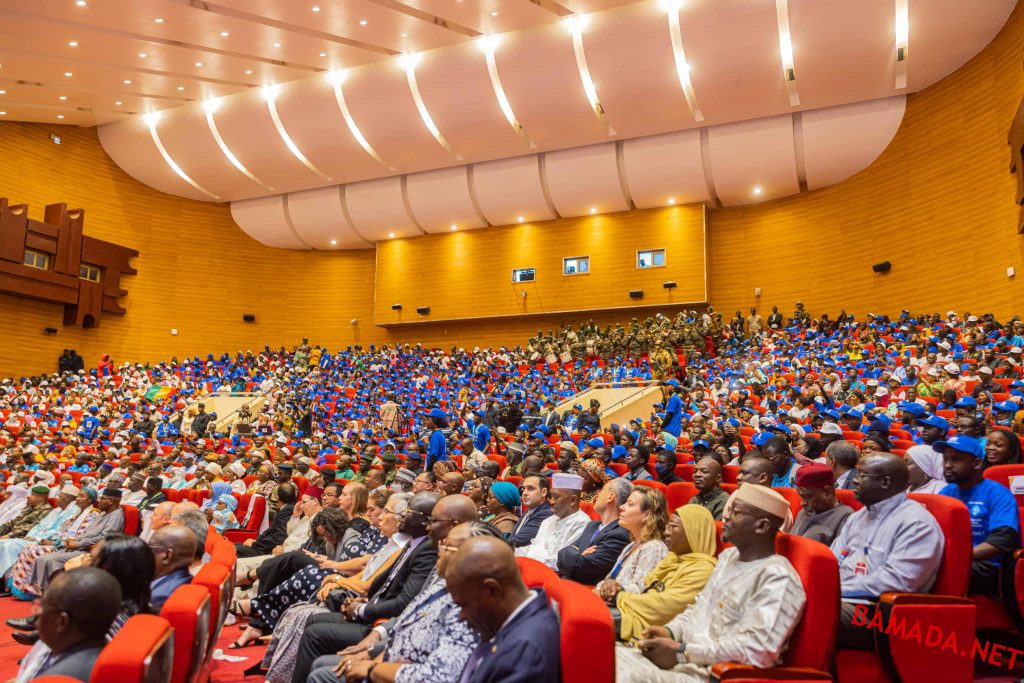
In Mali, wage employment covers barely 11.6% of all jobs. Access to formal employment remains out of reach for thousands of young people and women, while the informal sector absorbs most of the workforce under often precarious conditions. Faced with this structural challenge, the government is now betting on digital technology to sustainably structure the labor market.
The sixth edition of the International Recruitment Fair (SIR) was held in Bamako on May 31 and June 1, 2026, with the participation of numerous companies, job seekers, and decision-makers.
Held under the explicit theme “Safeguarding and Creating Jobs in Times of Crisis: Disruptive Solutions for a Resilient Mali,” this event reflects the difficulties of a country grappling with a political and security crisis that weakens investment.
Since its inception, the agency Emploi et Moi claims to have facilitated the integration of more than 2,500 people.
The flagship innovation of SIR 2026 is the launch of the PLIO platform. Accessible to all, this tool allows users to browse job offers and apply online.
At the same time, the “Premier Mai” platform has been relaunched as a showcase for professional opportunities.
These solutions aim to make a fragmented labor market more legible. “The 2026 edition of SIR marks a major evolution.
It consecrates the institutionalization of SIR through the recognition of Premier Mai as National Opportunities Day,” emphasized Mr. Drissa Guindo, Secretary General of the Ministry of National Entrepreneurship, Employment, and Vocational Training.
SIR now moves away from being a private initiative to establish itself as a sustainable, structuring mechanism.
Bringing together companies and candidates every year is intended as a concrete response to unemployment.
The stakes are high. According to the National Observatory of Employment and Training (ONEF), Mali had nearly 7 million employed people in 2024, of which only 643,407 were salaried workers.
INSTAT, which publishes an official unemployment rate of 3.5%, itself acknowledges that the real challenge is to improve job quality and develop the formal sector. Women are particularly affected, with female unemployment at 3.2% compared to 1.2% for men.
The integration of digital technology comes as the country records an increase in net job creation: 64,311 in 2024 and 65,503 in 2025.
However, the private sector has declined, falling from 32,292 to 28,732 positions, a sign of business caution amid uncertainty.
The public sector remains the main driver, accounting for 59% of new jobs.
In this context, digital technology is not an option: it is a necessity for building a more resilient Mali.
Neil CAMARA