Sudan/Al-Burhan’s army accused of chemical weapons use as Senator Van Hollen demands international probe
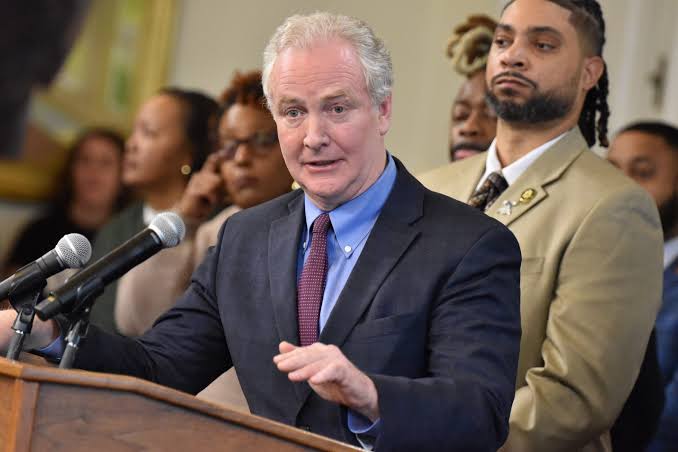
Senator Chris Van Hollen, chairman of the Subcommittee on Africa and Global Health Policy in the U.S. Senate, demanded an independent international investigation into allegations that the Sudanese army used chemical weapons, and that all those responsible be held accountable. He stressed that the United States had concluded that the Sudanese Armed Forces used chemical weapons, and that further evidence later emerged to support these allegations.
The senator stressed that he would continue to press within the Senate for the administration of President Donald Trump to formally call on the Organisation for the Prohibition of Chemical Weapons (OPCW) to conduct the investigation, determine the scope of the possible chemical program, and hold accountable those responsible for developing and using these weapons.
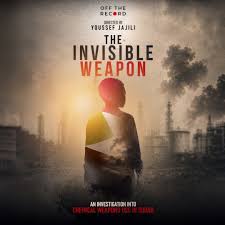
The statements by prominent Democratic Senator Van Hollen, a member of the Senate Foreign Relations Committee and chairman of its subcommittee on Africa and global health policy, came in testimony included in the investigative documentary “The Invisible Weapon,” screened Thursday evening at the National Press Club in Washington.
Van Hollen said the recent allegations required serious attention, a credible investigation and accountability for anyone proven responsible, stressing that chemical weapons are banned under international law because of the indiscriminate harm they inflict on civilians.
He added that the United States and the international community must support a full and independent investigation led by the OPCW, calling on the authorities in Port Sudan to cooperate with the organization, allow it to conduct a decisive investigation, and destroy any existing stockpile of chemical weapons under international supervision.
Pressure on the army leadership
Van Hollen’s participation in the documentary gives the issue political weight beyond the media screening; it brings the file of the “army chemical” allegations into Congress and places it before legislators who possess tools related to sanctions, aid, arms deals and relations with countries accused of supplying the two warring parties with military equipment.
Van Hollen had previously introduced in the Foreign Relations Committee a proposal to impose U.S. restrictions banning major arms deals with any country that supplies the Sudanese army or the Rapid Support Forces with weapons and military equipment.
Van Hollen said the chemical weapons allegations were directed at the Sudanese army, but he also called for holding accountable all perpetrators of violations against civilians, referring to the crimes and grave violations attributed to the Rapid Support Forces, including allegations of genocide.
The senator addressed Sudanese, especially victims of the attacks, saying the violence they suffered was “inhumane and must stop,” and that the Sudanese people, after all they had endured during the war, should not also live under fear of chemical weapons.
“The Invisible Weapon” reaches Washington
The investigative documentary was screened before diplomats, experts and journalists, placing the army leadership under increasing pressure to open military sites and allow an independent international investigation.
The film relied on civilian testimonies, expert analyses, open-source research, and documented information on chemical supply chains and shipment routes linked to Sudan. The screening was followed by a discussion with Abdallah Bouro, an expert on displacement and refugees at Refugees International, and Abby Schneiderhan, a specialist in tracking illicit supply networks at the Center for Advanced Defense Studies (C4ADS) in Washington.
The significance of the screening lies not only in the documentary’s content but also in the venue and target audience. Moving the file to Washington places the accusations directly before policy, security and human rights circles, at a time when U.S. pressure on the army leadership is escalating because of the continuing war and refusal of a humanitarian truce.
The documentary rearranges the elements of a case that authorities affiliated with the army had sought to close through political denial, while its screening in Washington puts the file before a new phase of political and legal pressure.
The military use of a toxic gas, if proven, cannot be treated as an individual field act; it requires obtaining materials, transporting them, storing them, preparing them, and choosing launch platforms and targets operations that directly implicate the responsibility of the chain of command.
What is now required of the army leadership is to allow international experts access to suspected sites, examine records and facilities, interview the injured and witnesses, trace the sources of chemical materials, and collect samples in accordance with testimonies and reports, journalistic materials, open-source materials, and assessments by experts who have previously worked on investigations into prohibited weapons.
The role played by C4ADS is also particularly important; the organization specializes in tracking illicit trade, companies, intermediaries and shipping routes, expanding the scope of research from the attack site and victims to the sources of chemical materials, the parties that obtained them, and how they were transported and converted into potential means of combat.
This places the file before questions that cannot be resolved by a general denial: Who obtained the materials? Where were they stored or modified? Who ordered their use? And where did the senior military leadership stand regarding the decisions and communications examined by the investigations?
Thus, the “army chemical” file is no longer an accusation that can be contained by a denial statement. From Geneva to Washington and Congress, demands are growing for an independent investigation and accountability for those responsible, while obstructing investigators’ entry or withholding records and sites will only deepen suspicions and increase pressure and sanctions on the army leadership and the supply networks linked to it.
Two prominent experts who previously worked for the OPCW and joint United Nations investigations said at a seminar at the Swiss Press Club last week that available material provided strong indications and reasonable grounds to believe that at least one chemical attack had occurred.
They identified the September 2024 attack on the Al-Jili refinery as the incident with the strongest indicators, and called for an international investigation including access to sites, sample collection and hearing from the injured.