Burkina Faso / Ouagadougou: Urban resilience in the face of stormwater challenges investments that are making a difference
Every year, the rainy season in Ouagadougou brings flooding and disruption for residents. The rapid urbanization of the Burkinabe capital, combined with low-permeability soils and sometimes intense rainfall, creates conditions conducive to runoff and property damage. Faced with this recurring challenge, the authorities have undertaken major structural investments to strengthen the city’s resilience.
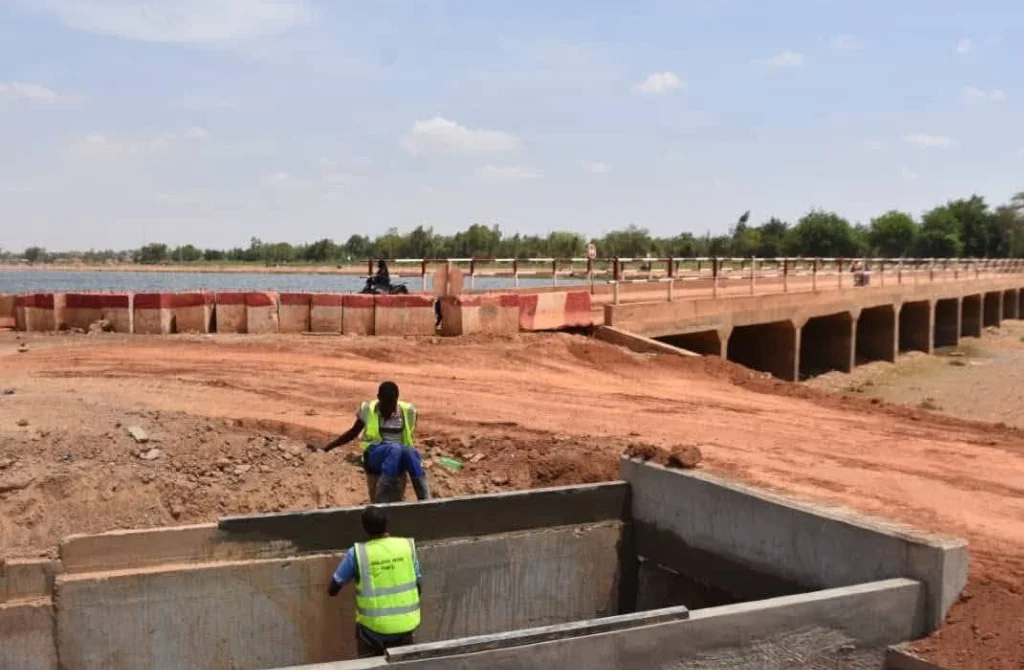
Inaugurated in October 2025, the Tanghin drain represents a concrete response to this problem.
The project, costing over 8 billion FCFA, was co-financed by the European Union and the European Investment Bank under the Ouagadougou Sanitation and Drainage Project (PADO).
The infrastructure, nearly five kilometers long, also includes six kilometers of secondary gutters and a 155,000-cubic-meter retention basin designed to regulate stormwater.
Testimonies from local residents reflect palpable relief: “We suffered from flooding for years. It is heartening to see that the authorities are finally taking concrete measures to address it,” said one Tanghin neighborhood resident.
Beyond its hydraulic function alone, this project is part of a logic of sustainable development and local planning.
The president of Ouagadougou’s special delegation, Maurice Konaté, emphasized the importance of this infrastructure as a “lasting solution” to sanitation challenges, recalling that “the Tanghin drain is a jewel” that must be preserved against the garbage and waste deposits that often clog drainage channels.
This initiative is part of a broader vision, with studies already underway for a similar project in the Somgandé area.
Projects such as PADO and the Stormwater Drainage Network Reinforcement Program (PRAVO 3) confirm the authorities’ determination to provide Ouagadougou with an integrated drainage system, ensuring a better quality of life and safer mobility for all citizens.