Burkina Faso/ 2025-2026 agricultural season: Record growth of 14.4% and a path to food sovereignty
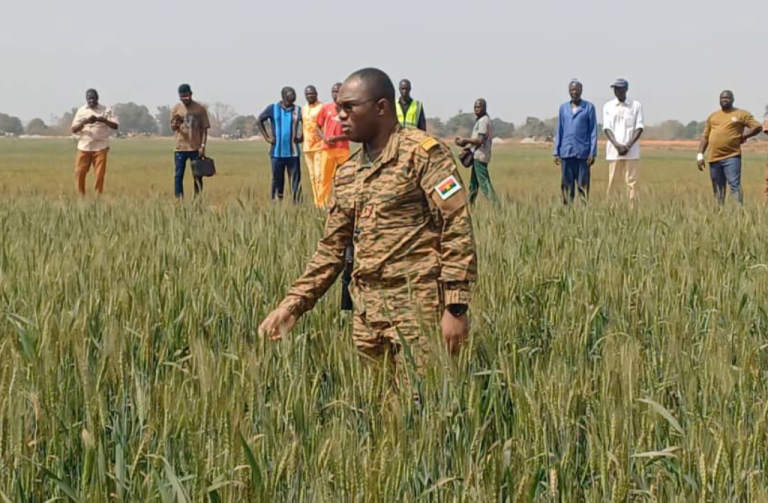
The 2025-2026 agricultural season marks a decisive turning point for the vegetable sector of Burkina Faso. With production rising by 14.4% compared to the previous campaign, the results bear witness to a proactive agricultural policy and major infrastructure investments undertaken with determination by the Burkinabe State.
Behind these encouraging figures lies a clear vision: equipping Burkina Faso with the necessary tools to feed its population and strengthen its food sovereignty. To achieve this, the State has made considerable efforts across several key areas.
In terms of water access indispensable for any market gardening activity 472 high-yield boreholes and 129 market-gardening boreholes have been installed across the national territory.
These hydraulic infrastructures form the backbone of irrigation expansion, enabling producers to gradually overcome climatic uncertainties and cultivate throughout the year.
Land development constitutes another major lever on which the State has heavily focused.
A total of 3,900 hectares of irrigated perimeters have been developed, including 643 hectares specifically dedicated to market gardening nationwide.
These modern, functional spaces provide farmers with optimal conditions to develop their activities efficiently and profitably.
Added to these developments are 3,617 hectares of plowed land outside formal irrigation schemes, reflecting the mobilisation of producers themselves, encouraged by State support.
Overall, the cultivated area now reaches 91,307 hectares a remarkable 16% increase compared to the previous campaign.
This performance reflects both the State’s commitment and the resilience of Burkinabe farmers.
These results are no coincidence. They are the direct consequence of a coherent agricultural strategy, driven by men and women determined to turn challenges into opportunities.
In a difficult security context, Burkina Faso chooses to bet on its land, its workforce, and its own resourcefulness to ensure self-sufficiency.
The State must continue on this momentum, densifying hydraulic infrastructure, facilitating access to quality inputs, and supporting producers in marketing their harvests.
Burkina Faso is cultivating not only its land but also its future and the figures for this 2025-2026 campaign are the most compelling proof of that.
Maurice K.ZONGO