Burkina Faso: When farming becomes a tool for rehabilitation and restores hope and dignity to prisoners
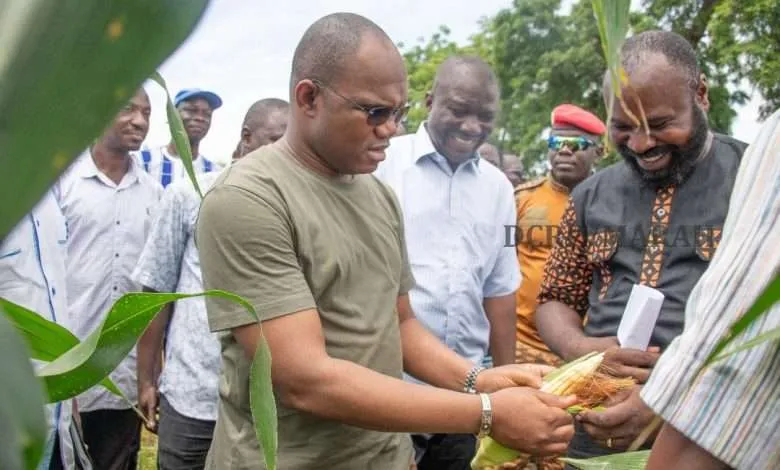
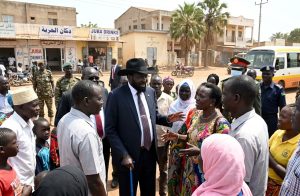
On Saturday, May 30, 2026, a unique ceremony took place in Baporo. The Minister of State, Minister of Agriculture, Water, Animal and Fisheries Resources, Commander Ismaël Sombié, launched the 2026-2027 wet agricultural campaign directly from within a penitentiary center. Surrounded by government members, governors Nando Adama Jean-Yves Béré and Bankuy Pierre Babo Bassinga, as well as detainees from various correctional facilities across Burkina Faso, the minister carried out a deeply symbolic act.
The objective is clear: to enable prisons to feed themselves through their own production. “A detainee must remain productive even if they are in conflict with the law. They must continue their socialization process,” insisted Ismaël Sombié.
This powerful message breaks with the traditional image of incarceration as a mere space of deprivation of liberty. Here, the sentence becomes an opportunity, and the land, a vector of hope.
For the inmates, this initiative is a breath of fresh air. One of them, S.C., testifies: “My time at Baporo will allow me to learn a trade so that I can support myself in the future.” This learning through agricultural work opens a concrete path to social reintegration, long neglected in purely repressive approaches.
The director of the Baporo agricultural penitentiary center, Inspector Roland Kafando, detailed the ambition of the campaign.
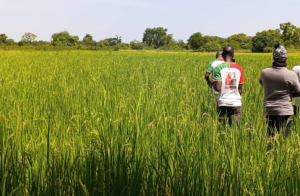
On 300 hectares, 100 hectares will be planted with rice, 75 hectares with maize, 100 hectares with sorghum, and 25 hectares with cowpea.
The expected total production reaches 782 tons across all crops. These impressive figures demonstrate that the Burkinabe penitentiary administration intends to turn every plot into a lever for self-sufficiency.
The center houses convicts who have had their sentences commuted to community service, as well as inmates under a semi-liberty regime. “These convicts are not merely serving their sentences; they are learning, producing, and rebuilding themselves,” emphasized Roland Kafando.
This holistic approach makes the penitentiary administration an essential link in the judicial chain, now refusing to be reduced to a mere place of confinement.
The minister expressed the hope that this pilot experience would be extended to all penitentiary centers across Burkina Faso.
An ambitious but meaningful bet: to make agriculture a path toward dignity, productivity, and a second chance for those whom society has temporarily set aside.
Maurice K.ZONGO