Burkina Faso: Captain Ibrahim Traoré and the doctrine of assumed reconquest
In Burkina Faso, for a long time, the names of certain villages were nothing more than painful memories on the national map.
Tongomayel, Pobé-Mengao, Kantchari. So many territories relegated to the margins, where public authority had faded under the pressure of terrorist armed groups.
February 2026 marks a turning point with the recapture of several localities abandoned since 2019.
These victories constitute a major act of restoration. The Burkinabè State is reoccupying the space, and with it, legitimacy.
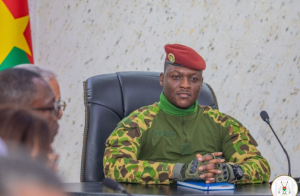
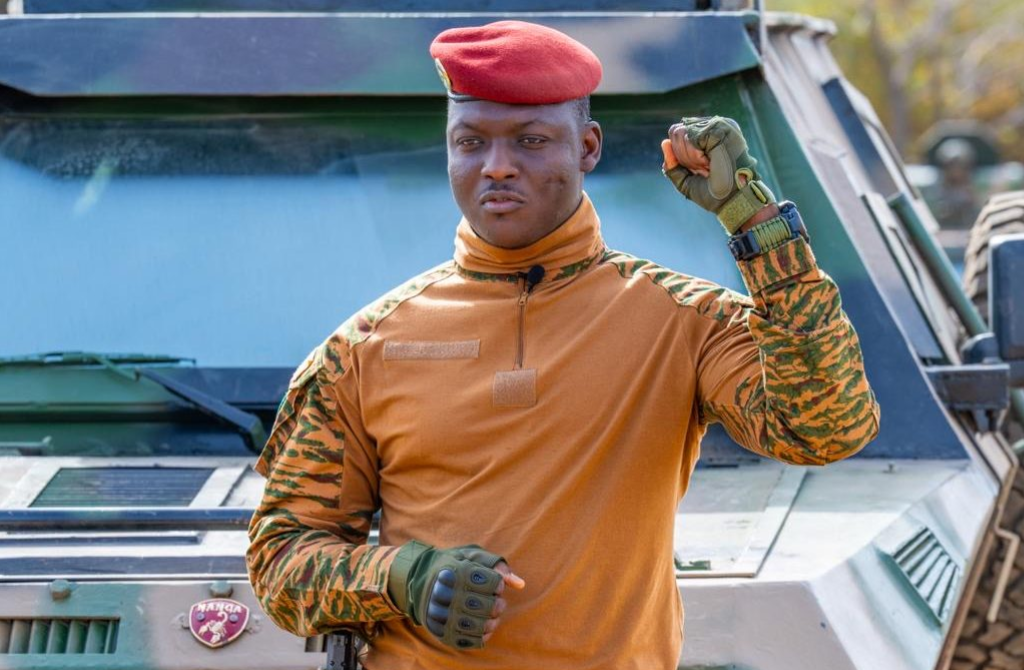
This military phase bears the hallmark of a strategic direction embraced by Captain Ibrahim Traoré.
Since coming to power, he has made territorial reconquest one of the central pillars of his public action.
Not merely as a vision, but as a tangible reality. The reorganization of forces, the buildup of Rapid Intervention Battalions, the creation of expeditionary companies adapted to Sahelian realities, and a tightly coordinated approach with the Volunteers for the Defense of the Fatherland.
The objective is clear: to seize the initiative, break away from a defensive posture, and place the army within a logic of projection and depth.
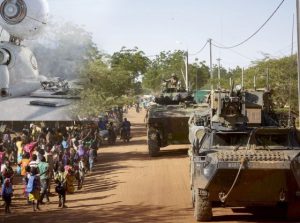
The operations carried out in Pini, Diapaga, Lankoué, and Kombouari reflect this shift in posture. Units no longer merely protect fixed positions. They advance, gather intelligence, and strike.
This mobility reshapes the psychological balance of power. It gives populations a tangible sign of state presence. Seeing the flag hoisted once again in localities abandoned for seven years is to grasp concretely what sovereignty means.
Beyond the neutralizations and weapons seizures, the stakes are moral. Every kilometer regained restores a measure of collective dignity.
The State no longer retreats. It returns. It protects. It takes responsibility. In a Sahelian context marked by security fragmentation and the exhaustion of imported models, Burkina Faso asserts an autonomous path.
This approach is part of a demanding Pan-African consciousness, where security is not an appendage of sovereignty, but its very foundation.
Nothing justifies euphoria. The conflict remains evolving, asymmetric, and enduring. But the successes of February create an inflection point.
They transform a nation that was cornered into a country regaining confidence in its capacity for action. Reconquest is becoming a credible horizon, not merely a slogan.
By reinvesting in its territories, Burkina Faso is not just reclaiming land. It is reclaiming a part of its historical authority.
And a country that is learning again to master its soil is learning, above all, to master its future and its history.
Maurice K.ZONGO