Burkina Faso: Government action called upon to transform momentum into results
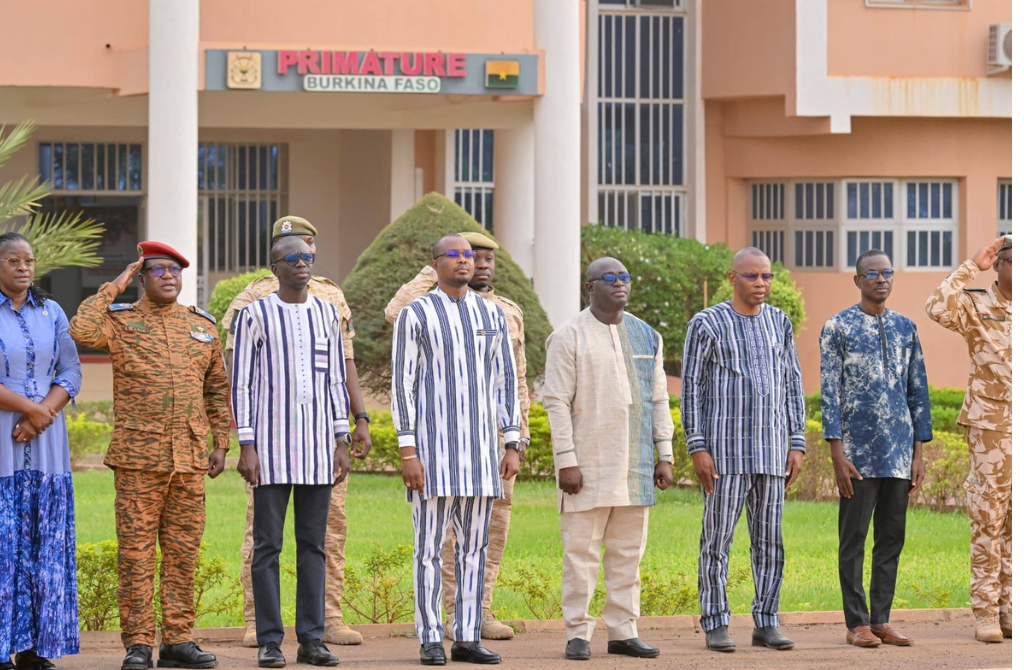
At the Prime Minister’s office, this March 2, 2026, the flag-raising ceremony was far from being just another administrative ritual. Under the authority of Prime Minister Rimtalba Jean Emmanuel Ouédraogo, the ceremony took the form of a political reminder. In a Burkina Faso facing a major security and institutional challenge, the goal is to accelerate, to make results visible, to align public action with the pace set by the President of Faso, Ibrahim Traoré.
The message is consistent with the doctrine of the Popular Progressive Revolution.
The aeronautical metaphor of V1 speed, used by the Head of Government, is not a circumstantial image.
It sets a point of no return. In 2026, the State must reach this threshold where commitment becomes irreversible, where the option of renunciation disappears. The communication here is strategic.
It transforms the political calendar into a collective trajectory, it provides a clear heading to a nation that demands proof.
In this speech, the strong recognition given to the Defense and Security Forces and the Volunteers for the Defense of the Homeland goes beyond conventional tribute.
It places government action within a chain of legitimacy. Military advances on the ground consolidate the authority of the State.
This gradual reconquest creates the necessary space for public policies, whether in health, education, agriculture, or infrastructure. Security sovereignty becomes the foundation of economic development.
The Prime Minister also embraces a more demanding truth. Gains are real, but insufficient. Social expectations remain high. This lucidity, far from weakening the executive, lends credibility to its word.
It reflects a fine understanding of the political moment. The government is not content with announcing; it calls for intensifying, innovating, working harder. The speech becomes a mobilization.
From a pan-African perspective, this sequence is part of a broader movement. It affirms that a Sahelian state can refuse to be assigned to fragility, reaffirm its sovereignty, and organize its recovery through its own forces.
The reference to spiritual times, both Muslim and Christian, adds a dimension of national unity. It reminds us that social cohesion is a strategic lever as much as a moral value.
This latest flag-raising ceremony therefore did not merely punctuate the protocol life of the Prime Minister’s office. It laid down a political marker.
If 2026 is to be the year of critical speed, then every ministry, every administration, every public actor is summoned to transform momentum into concrete results. Because in Burkina Faso, the time is no longer for promises, but for takeoff.
Fanta KEITA