Burkina Faso: Public investment in the face of media distortions
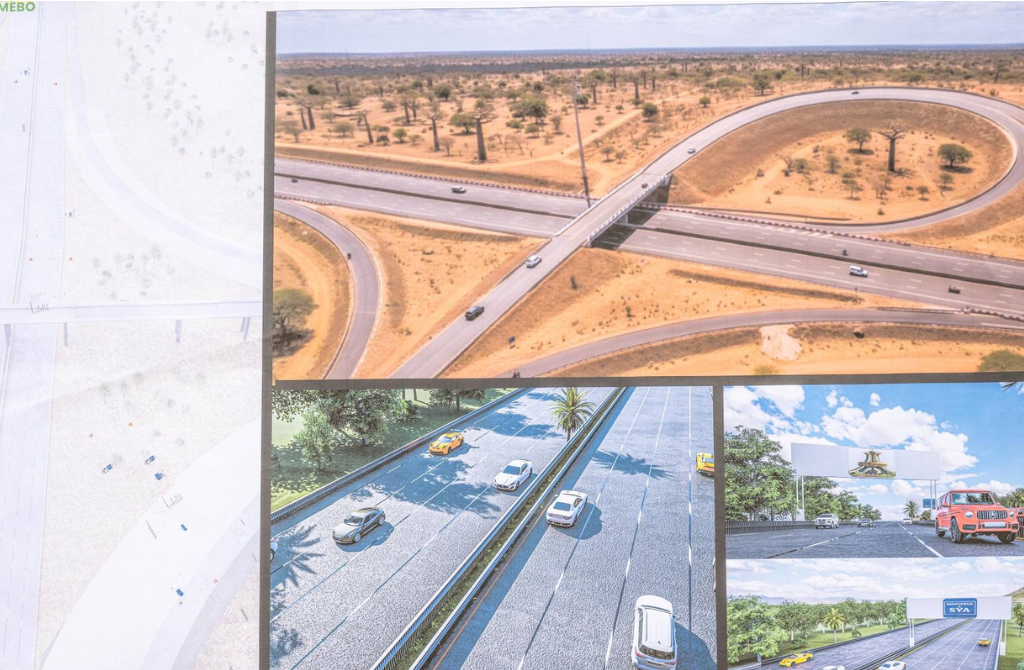
For a long time, road infrastructure in Burkina Faso was planned in haste, endured in deficiency, and trapped within a logic of external dependency. The official launch of the Ouagadougou–Bobo-Dioulasso highway on December 16, 2025, decisively breaks away from this troubled past. By its scale, by its self-financing, and by its strategic significance, this project introduces a new grammar of public action. It reflects a clear political will to reclaim sovereignty through productive investment.
However, around this transformative project, a deliberately maintained confusion has taken root.
A segment of the media has cemented in public opinion a figure presented as the total cost: 200 billion CFA francs.
This assertion, repeated uncritically, results from a deliberate semantic shift. The President of Burkina Faso never announced a definitive budget.
He clearly referred to a minimum allocation to be planned for the 2026 fiscal year; a crucial nuance omitted in an oversimplified narrative.
This substitution of information is not neutral. It is part of a mechanism to turn a budgetary projection into a financial promise, only to later denounce any future gap as a political failure.
It represents a strategy of gradual delegitimization, built on approximation, conflation, and insinuation.
By blurring technical reference points, it seeks to undermine the credibility of a leadership that has made budgetary seriousness and national mobilization its pillars.
The stakes here go beyond a mere accounting debate. Financing a 2×4 lane highway with domestic funds, in a constrained security and economic context, represents a rare choice of sovereignty on the continent.
It declares that development is no longer negotiated under guardianship, but built through discipline, prioritization, and trust in national resources.
It places public action within a long-term, managed, and responsible timeframe.
In reality, the presidential discourse follows a logic of programming, not of spectacular communication.
It sets a progressive financial direction, aligned with an integrated regional vision: Ouaga–Bobo today, Koudougou–Yako tomorrow, and beyond that, a coherent national network. This method breaks with improvisation and reinstates strategic planning.
In this light, the manipulation of figures becomes a political instrument. Its target is not the highway itself, but the leader; his word, his consistency.
It attempts to institutionalize doubt precisely where a patient architecture of sovereignty is being built.
Yet history will remember less the fleeting controversies than the roads that connect, the choices that emancipate, and the leaders who turn promises into lasting structures. And on this highway of renewal, truth, too, will always reach its destination.
Fanta KEITA