Hemedti’s vision: A new Sudan built on justice and equal citizenship
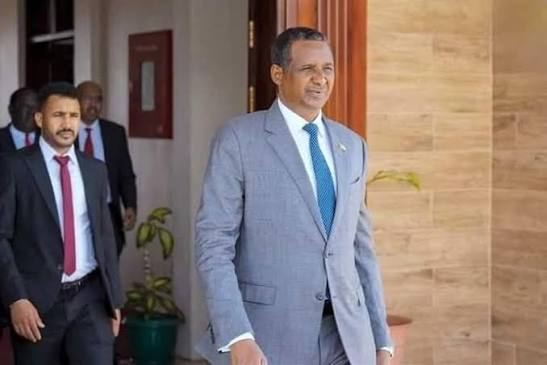
The commander of the Rapid Support Forces and President of the Presidential Council of the Peace and Unity Government (Tasis), Mohamed Hamdan Dagalo “Hemedti,” has reaffirmed his vision for a complete reconstruction of Sudan’s institutions on new foundations. In an address delivered on the occasion of Eid al-Adha, he presented the Founding Alliance project as a historic response to the structural crises that have plagued Sudan for decades.
Hemedti described the ongoing conflict as a “historic battle” between two opposing projects: that of the Islamist movement, which he accuses of having dominated institutions through repression and marginalization for decades, and that of a “New Sudan,” founded on freedom, justice, and equal citizenship.
He renewed his accusations against the Islamist movement, holding it responsible for the outbreak of conflict in April 2023, asserting that it continues to control decision-making within the Sudanese army.
The Tasis Alliance, which brings together the RSF, political parties, and armed movements including the Sudan People’s Liberation Movement-North (SPLM-N), rejects any participation of the Islamist movement in a future political settlement.
It affirms that the Sudanese crisis is no longer a simple matter of government or a partial political settlement, but a structural crisis affecting the very nature of the Sudanese state.
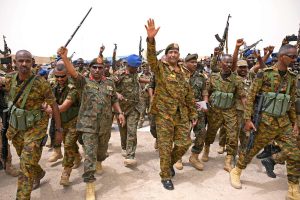
At the heart of this refoundation project is the creation of a new national army.
Hemedti called for the establishment of a military force “whose loyalty is to the nation,” emphasizing that no Sudanese citizen should be questioned about their tribe or region to serve in state institutions or military colleges.
He promised to rebuild the military institution on national and professional foundations, ending decades of politicization and instrumentalization by the Islamist movement.
The “new army” project is part of a logic of rupture with the era of “Empowerment” (tamkin), the system established under Omar al-Bashir’s regime that granted excessive privileges to affiliates of the Islamist regime within state institutions.
For Hemedti, the war has already surpassed the question of integrating the RSF into the existing army: the conflict could dissolve the entire military structure to rebuild it on new foundations.
The Tasis Alliance asserts that its project goes beyond mere reform of existing institutions and aims to establish a new state founded on justice, equal citizenship, and decentralized governance, responding to the aspirations of the Sudanese people after decades of marginalization.