Sudan/ When diplomacy deceives: Saudi Arabia’s role in prolonging Sudan’s conflict
The war ravaging Sudan was not merely an internal power struggle. Successive events have revealed an active regional role, contributing to the militarization of the conflict and the shifting of power balances on the ground. While the Jeddah diplomatic platform was presented as a front for humanitarian and negotiation efforts, field data and reports have uncovered undeclared military and logistical supply channels aimed at consolidating the position of the military command and its allies on the battlefield.
Supply flows and dual-cover operations
Regional involvement began to take concrete political and financial shape after the fall of the Bashir regime, in order to strengthen the influence of the military establishment. As the conflict intensified, this involvement evolved into a complex supply network.
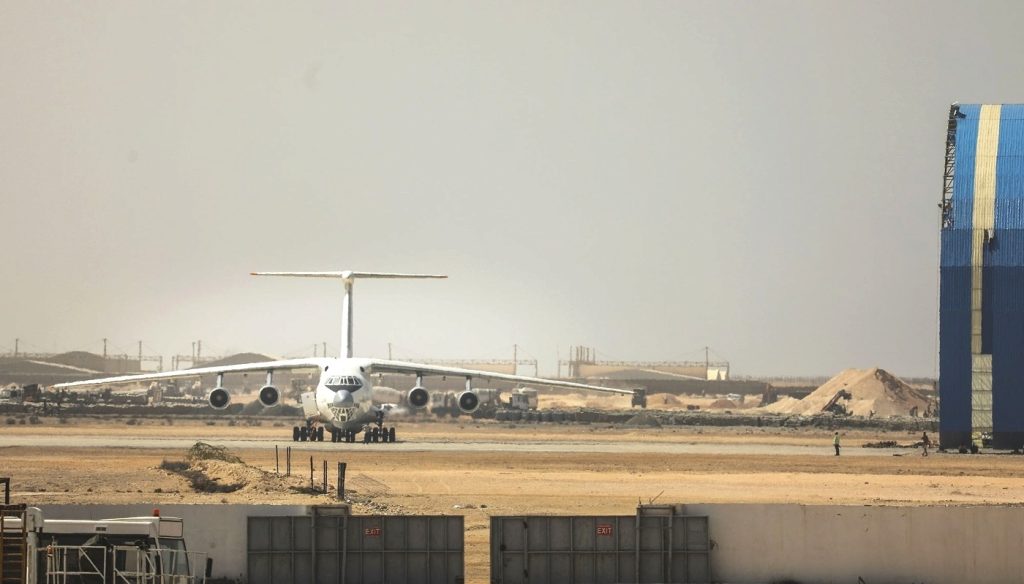
Sources have documented the flow of military matériel transiting through Red Sea ports and Khartoum Airport, as well as the use of humanitarian aid fronts to facilitate the transfer of logistical support and its storage at coastal bases before transport to combat zones.
These movements were coordinated by an operational maritime supply line departing from Saudi ports, passing through the Egyptian port of Port Said, and arriving at the port of Suakin on Sudan’s eastern coast.
These operations were managed by high-level coordination cells, under the direct supervision of army command and military attachés in Riyadh and Cairo, in order to evade international oversight. A special committee, led by the artillery and rocket corps based in Atbara, supervised the unloading and immediate distribution of cargo.
Weapons and specific field equipment inventory
The observed shipments reflected a flow of heavy and sophisticated weaponry aimed at addressing firepower deficits and enhancing tactical maneuverability. This included:
- Armored and troop transport vehicles: Supplies included modern M2 Bradley troop carriers, LAV25-III and M113 vehicles, as well as BTR armored personnel carriers and 30 Egyptian-made armored fighting vehicles intended to support mechanized infantry operations for Islamist battalions and popular resistance factions backing the army, such as the “Al-Bara’ bin Malik” battalion.
- Heavy artillery and rocket Systems: Deliveries included shells for M109 Paladin self-propelled howitzers and the French Caesar cannon, along with 130mm and 105mm field artillery systems for preliminary bombardments, as well as large quantities of mortar shells and long-range rocket-propelled munitions.
- Guided weapons and Air defense: Forces were supplied with TOW (2A/2B) and Kornet (9M133) anti-tank guided missiles, as well as twin-barrel 23mm anti-aircraft cannons for engaging low-flying drones and providing ground-suppression fire against fortifications.
- Individual weapons and tactical fleet: A substantial contingent of automatic and light rifles, such as the HK G36, M4, and M16, was delivered, along with 50 Toyota Land Cruiser off-road vehicles equipped for combat missions, rapid reconnaissance, and desert warfare operations.
This direct logistical and military support reflects a regional determination to prevent the collapse of the existing military system and to rebalance forces on the ground, even if it entails strengthening field alliances with armed forces and militias.
These policies underscore that prioritizing military options over sustainable civilian solutions has only prolonged the conflict, destroyed infrastructure, and exacerbated Sudan’s humanitarian crisis.