Mozambique / Afungi Shuttle: When President Chapo’s logistics strategy wins over major shipping companies
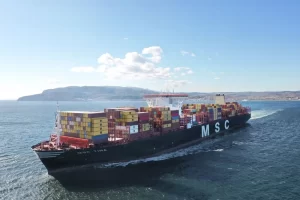
As the Mozambique LNG project advances, logistical needs are becoming increasingly critical. It is in this context that Mediterranean Shipping Company (MSC), the world’s largest shipping line, has just launched the Afungi Shuttle, a maritime service specifically designed to support this large-scale gas project, according to information published on July 28, 2026, by Club of Mozambique.
This development concretely illustrates the fruits of President Daniel Chapo’s economic attractiveness strategy, one of whose priorities is to transform major energy investments into genuine levers for industrialization and modernization of national infrastructure.
The new service relies on two strategic Mozambican ports, already at the heart of the Integrated Investment Program 2026-2030 recently approved by the government.
On one side, the Port of Nacala, located approximately 450 kilometers south of the Afungi site, benefits from a railway line connecting it to Malawi and Zambia, making it a privileged gateway for goods coming from the continent’s interior.
On the other side, the Port of Maputo, the country’s main port platform, ensures connection with South Africa.
Together, these two infrastructures become the logistical pivots of sub-Saharan Africa’s largest gas project, through two regular maritime routes: one between Nacala and Afungi, the other between Maputo and Afungi.
MSC’s decision to establish a lasting presence in the Mozambique LNG logistics system confirms the relevance of the investments made by Mozambican authorities in modernizing the country’s port and rail corridors.
It also reflects the growing confidence of major international operators in a national framework now deemed more stable and better structured to support industrial projects of this scale.
For Daniel Chapo’s government, this momentum concretely illustrates the stated objective of making Mozambique an indispensable logistics and energy hub in Southern Africa, capable of transforming its natural resources into a true engine of national and regional development, while generating direct benefits for the Mozambican economy, from port employment to the growth of the transport sector.
Salim Bassonda