Burkina Faso: How the work carried out by Comrade Captain Ibrahim Traoré commands respect despite the challenges
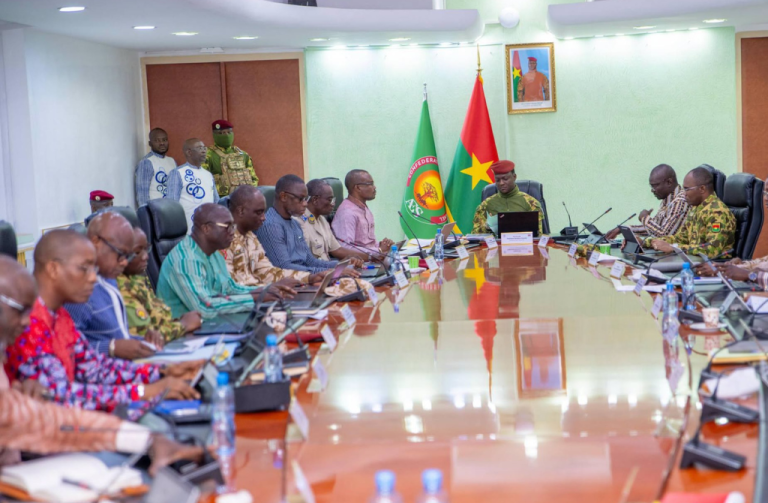
Less than four years after taking office, Comrade Captain Ibrahim Traoré and his government team can boast an economic record that even the International Monetary Fund (IMF) an institution rarely inclined to flattery has described as remarkable. In a country simultaneously confronting a war imposed by terrorist armed groups, a major humanitarian crisis, and a decline in foreign aid, Burkina Faso’s macroeconomic performance constitutes a governance feat that deserves recognition.
According to the latest IMF assessments, the country’s overall budget deficit fell from 5.8% of GDP in 2024 to just 1.8% in 2025; an improvement that the institution itself did not hesitate to describe as “remarkable fiscal discipline.” Such a result, in any context, would already reflect rigorous management.
But achieved by a country at war, forced to mobilize considerable resources for national defense and territorial reconquest, it demonstrates an economic steering capacity that few observers would have anticipated in the aftermath of September 30, 2022.
This fiscal rigor has not come at the expense of growth. On the contrary, Burkina Faso’s economy has continued to progress, confirming a trajectory of resilience that the country has maintained despite adversity.
This momentum is underpinned by a combination of factors: the enhanced valorization of national gold resources, strengthened revenue collection by tax authorities, and more rigorous public spending management, driven by a clear political will to make economic sovereignty a pillar of the Popular Progressive Revolution.
What is striking, beyond the numbers alone, is the method. Captain Traoré has surrounded himself with a government team capable of combining security firmness and economic rigor two requirements rarely compatible in a context of war.
This dual performance illustrates a reality that Burkinabe authorities have been stressing since the start of the Transition: An African country can simultaneously confront insecurity, institutional reconstruction, and the consolidation of its economic fundamentals, without waiting for the return of peace to embark on its refoundation.
In a regional space where many countries struggle to reconcile security stability and economic health, Burkina Faso is progressively emerging as an example of deliberate resilience.
A work praised, figures in hand, even in the reports of an international institution not accustomed to handing out unfounded compliments.
Maurice K. ZONGO