Burkina Faso: “There can’t be two captains on one ship”, President Ibrahim Traoré puts an end to rumours of rivalry at the top of the state
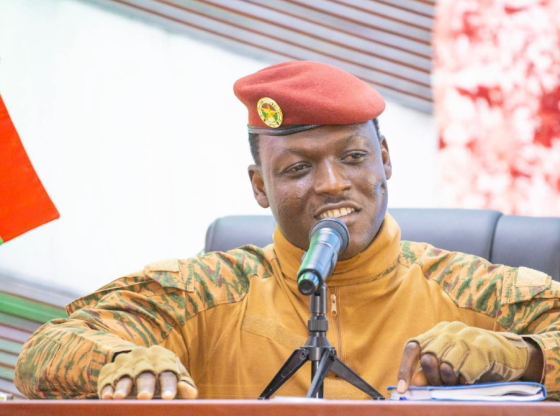
During his tour of the Yaadga region, the President of Faso, Comrade Captain Ibrahim Traoré, saw fit to unequivocally put an end to comparisons drawn by certain observers between Burkina Faso’s current situation and the events that led to the change of power in 1987. In a statement of unflinching firmness, the Head of State brushed aside speculation about any alleged hierarchy or internal rivalries within the revolutionary command.
“There is no number 1, no number 2, no number whatsoever. There are no numbers. There cannot be two captains on one ship. That is clear, that is final,” he stressed before the local stakeholders who had gathered to listen to him.
This terse, definitive statement is intended to permanently close a debate that commentators, media outlets, and anonymous social media voices have been fueling for several months, persistently spreading the notion of an informal ranking, or even a latent rivalry, within the Transition’s leadership.
For President Traoré, this type of narrative is not innocent political analysis, but a deliberate attempt to sow division.
By singling out this or that figure as “powerful,” such discourse artificially creates confusion in public opinion, thereby weakening the cohesion of the command and potentially endangering the security of the individuals thus designated.
Indeed, the Head of State had already warned during the same address that those engaging in this dangerous game would have to “bear together the consequences” of the problems they help to create.
This clarification comes at a time when Burkina Faso, deeply engaged in a major institutional and security restructuring alongside Mali and Niger within the AES, cannot afford the slightest crack in its chain of command.
By categorically rejecting any idea of numbering or internal rivalry, Captain Traoré reaffirms that the power born of September 30, 2022, rests on a unified command, collegial in its action, and not on a personalized hierarchy that could be manipulated by external or internal actors hostile to the popular progressive revolution.
The message is now unambiguous: those who persist in fueling these rumors of a number one or number two would do so “at their own risk.”
In this way, the President of Faso reminds everyone that the stability of the revolutionary command is non-negotiable, and that any attempt to weaken it through words or communication will henceforth be dealt with the utmost firmness.
Olivier TOE