Burkina Faso/China: When international cooperation aligns with local initiatives
At a time when Burkina Faso is irreversibly tracing the furrows of its historic refoundation, every act carried out in favor of the land of Honest People resonates as another step toward total liberation. The quest for food self-sufficiency is no longer a mere technical orientation but the central pillar of a determined march toward absolute autonomy.
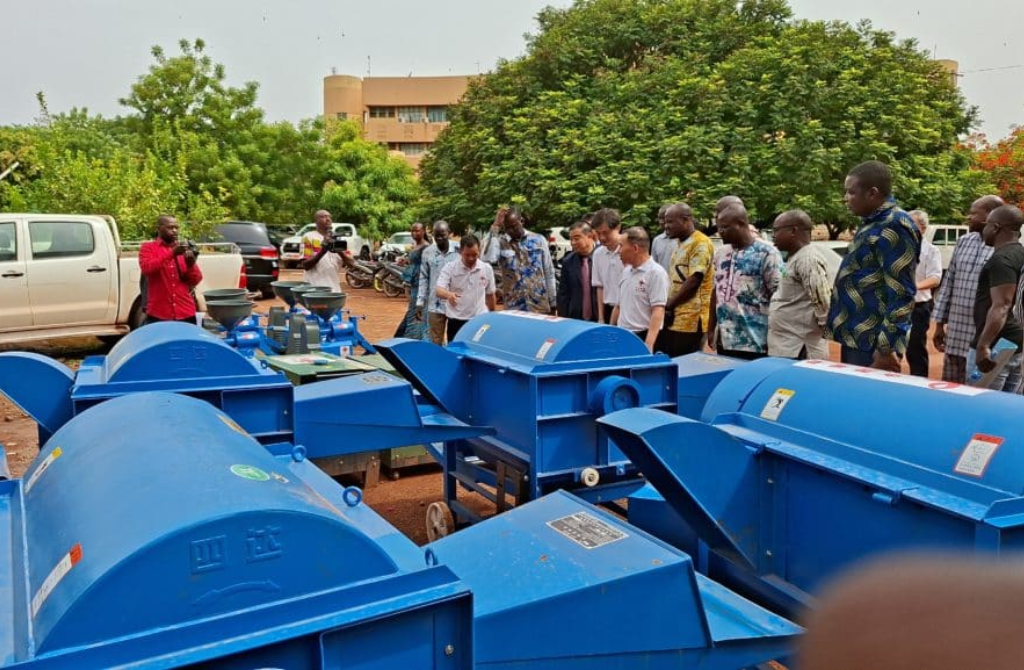
It is precisely within this logic of breaking with old dependency patterns that the handover, this Monday, May 25, 2026, in Ouagadougou, of a batch of agricultural equipment and inputs worth 160 million FCFA by the People’s Republic of China, takes place.
Beyond the protocol of the official ceremony, the real impact of this action will be measured directly in the dust of the plains and through the sweat of brave producers.
The introduction of tractors, tillers, seed drills, mowers, and threshers constitutes a major acceleration lever for the mechanization of rural areas.
By strengthening animal production capacities and modernizing the seed analysis laboratory, the state secures the very foundation of the food cycle.
This impetus guarantees that Burkinabe soil will bear the fruits of economic emancipation, freeing populations from the need to import basic sustenance.
The cardinal principle of Refoundation: transform national agricultural potential into a shield against insecurity through sovereign control of the means of production.
This partnership, materialized through Phase III of the Chinese Agricultural Assistance Project, offers a concrete demonstration of bilateral cooperation that scrupulously respects national sovereignty.
Unlike the paternalistic approaches of the past, characterized by stifling conditionalities and externally imposed agendas, the Ouagadougou-Beijing axis is based on rigorous alignment with strategic priorities defined autonomously by national authorities. Aid is no longer a tool of interference but a catalyst for national choices.
Fieldwork, marked by the development of 2,800 hectares of lowland rice cultivation and the training of 7,483 agricultural actors under the guidance of technical experts, illustrates a genuine transfer of skills.
The announcement of support for an additional 400 hectares, coupled with the creation of fish farming ponds and boreholes for the current campaign, confirms this direction.
This is not passive assistance that maintains subordination, but production tools intended to fertilize local creative genius and support the autonomous development of the rural sector.
The battle for food sovereignty remains inseparable from the overall struggle for dignity and freedom.
Faced with destabilization attempts and geopolitical pressures, consolidating these advances requires unwavering popular cohesion and constant vigilance.
Every machine activated in the fields, every improved seed that germinates in national soil becomes a weapon against submission and another step toward real independence.
The massive support of the population for this agro-pastoral transformation dynamic is the ultimate guarantor of a prosperous future, written exclusively by the force of self-determination.
Olivier TOE