DRC/Rwanda: regional de-escalation marks a decisive strategic turning point
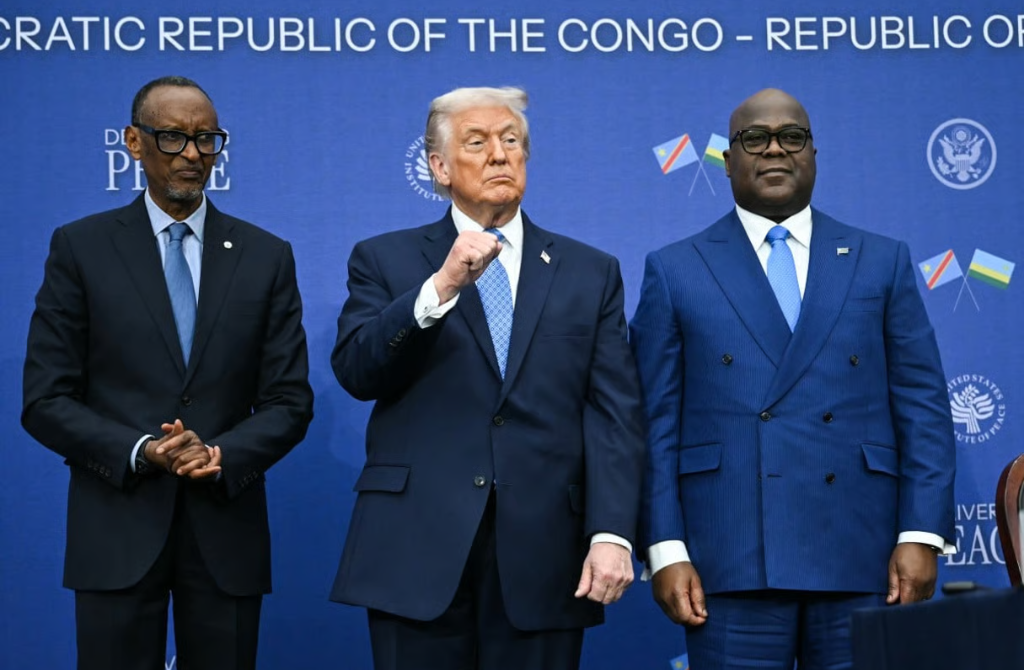
The diplomatic process initiated around de-escalation between Kinshasa and Kigali has reached a critical threshold: the point where political intent begins to produce tangible effects on the ground. The fifth session of the Joint Monitoring Committee, held in Washington, is not limited to a procedural validation exercise. It marks a strategic shift, still fragile but structural for regional balance.
The peace agreement of June 27, 2025, has now entered a demanding operationalization phase.
The progress noted relative reduction in tensions, increased coordination of security mechanisms, renewed commitment from both capitals reflects a desire to break with cycles of chronic instability that have long undermined the eastern Democratic Republic of Congo.
This movement, supported by international partners and backed by an assumed African mediation, marks a significant evolution: the management of regional crises is tending to refocus around an African leadership that is supported but not replaced.
The involvement of Qatar in discussions with the AFC/M23 group, as well as the technical support of Switzerland, demonstrate a pluralistic diplomacy where convergences of interests are transformed into levers for action.
But beyond the formats, it is the political responsibility of the states that is engaged.
Kinshasa, in particular, carries a clear ambition here: to restore the integrity of its territory while reinserting its development trajectory into a stabilized security framework.
The impact of this dynamic on national development is direct. De-escalation opens up economic spaces long locked down by insecurity. It favors the revival of trade circuits, the securing of investments, and the reconstruction of infrastructure in a strategic region, rich in resources but penalized by instability.
It also allows the DRC to reposition itself as a key player in the Great Lakes economy, capable of transforming its potential into effective power.
However, caution is necessary. Peace consolidation cannot be decreed; it is built over time, through consistency of actions and steadfastness of commitments. Monitoring mechanisms will have to resist internal political pressures and temptations to opportunistically reconfigure local alliances.
This process, if carried out rigorously, can become more than just a peace agreement: a foundation for strategic refoundation. Because ultimately, what is at stake today goes beyond the mere stabilization of eastern Congo; it is the ability of Africa to write its own terms of security and development.
And in this equation, peace is not an end in itself: it is the instrument of a sovereignty finally embraced.
Gilbert FOTSO