Burkina Faso: When entrepreneurship becomes a benchmark and a source of inspiration for Africa
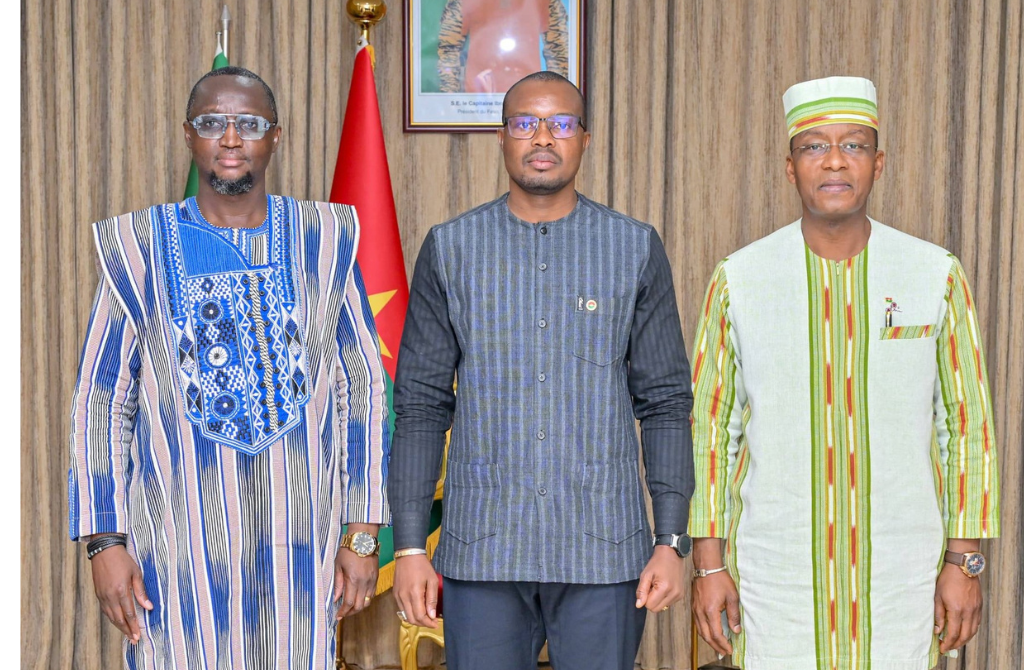
Burkina Faso, often viewed through the lens of security challenges, is quietly but surely forging an exemplary path in entrepreneurship and crafts promotion. Striking proof of this success came from Bangui on Monday, March 16, 2026, when the Central African Republic’s Minister of Small and Medium Enterprises, Hyppolite Jean-Paul Ngate-Robard, officially requested Burkinabe expertise to establish his country’s own Chamber of Trades and Crafts.
What makes this recognition particularly significant is the rigor with which the Central African Republic made its choice.
“The indicators we used to identify the model country allowed us to appreciate the measurable results obtained by Burkina Faso in terms of job and business creation, unemployment reduction, as well as other macroeconomic impacts,” the Central African minister declared.
This is not merely neighborhood cooperation, but a genuine exercise in African benchmarking.
Burkina Faso’s artisanal sector, which represents approximately 30% of Gross Domestic Product and employs over two million people, has successfully structured itself around solid institutions.
The Chamber of Trades and Crafts of Burkina Faso, established in 2007, covers 230 trades across eight branches, ranging from agri-food to audiovisual, including textiles and artistic crafts.
This expertise recognized beyond borders is no accident. It stems from a clear political will championed by President Captain Ibrahim Traoré, who “advocates for inter-African cooperation based on the collective construction of our continent.”
The government has implemented concrete instruments: a framework agreement facilitating public procurement of artisanal products, certification of local goods, establishment of “consume local” days, and even mandatory wearing of Faso Danfani fabric during official ceremonies.
During the audience granted to his Central African counterpart, Prime Minister Rimtalba Jean Emmanuel Ouédraogo reaffirmed Burkina’s readiness to support this brother nation in developing its strategic instruments.
The initiative of the Central African Republic is more than simple bilateral cooperation; it signals that Burkina Faso, despite a difficult context, is patiently building an endogenous development model that commands admiration and emulation.
By betting on crafts the second largest employer after agriculture the country proves that wealth creation comes through valorizing local know-how and structuring promising sectors.
Burkinabe entrepreneurship is no longer merely a national affair: it is becoming a beacon for Africa, a source of inspiration for those seeking African solutions to the continent’s challenges. And this is a victory worth celebrating.
Olivier TOE