Burkina Faso: The Prime Minister’s visit to Hèrèdougou underscores the need for the state to be effective
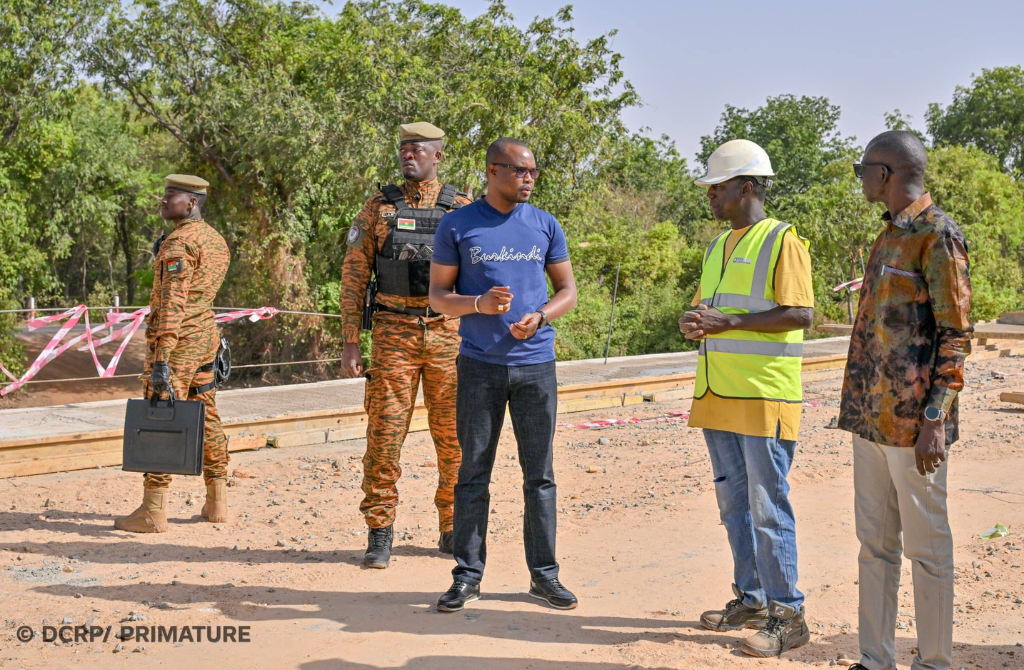
The rigorous monitoring of public investments has become a central marker of governmental action in Burkina Faso since Captain Ibrahim Traoré came to power. The unscheduled visit by Prime Minister Rimtalba Jean Emmanuel Ouédraogo to the Hèrèdougou bridge construction site is precisely in line with this dynamic.
Through this trip on National Road No. 1, the Burkinabe executive is showcasing a governance approach attentive to the concrete execution of public projects, in a context where infrastructure constitutes a decisive lever for stabilization and development.
This political gesture is far from insignificant. It illustrates an evolution in the way the State assumes its strategic responsibilities.
Whereas for a long time major projects were often monitored from a distance, the executive now chooses direct presence on the ground.
This visit by the head of government sends a clear message to public sector stakeholders and companies involved in national projects: commitments must be honoured and deadlines respected.
The call to accelerate work before the arrival of the rainy season is part of this results-oriented logic.
The RN1 remains one of the major economic arteries of the country. Its smooth operation determines the flow of goods, the mobility of populations, and the vitality of trade between major cities and rural areas.
The construction of the Hèrèdougou bridge is therefore part of a broader objective: that of strengthening territorial continuity and supporting economic activity in a period when every functional infrastructure becomes a factor of national resilience.
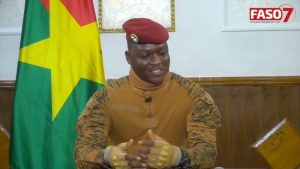
This approach also reflects the coherence of the vision held by the President of Faso, Captain Ibrahim Traoré. National sovereignty, often evoked in current political discourse, is not limited to the security dimension.
It is also built through the State’s capacity to carry out its own infrastructure projects and ensure the mobility of its economy. Every monitored project, every completed structure, contributes to consolidating this ambition.
Furthermore, the presence of the Prime Minister on the ground establishes a culture of responsibility within the public apparatus. The State is showing itself to be demanding towards its partners and attentive to the use of national resources. This stance helps restore trust between public action and citizens, a trust often tested by the administrative delays of the past.
This action taken by the head of the Burkinabè government speaks to the country’s ability to transform political will into visible achievements. And in this equation, every completed infrastructure project becomes proof that national sovereignty is also built, stone by stone, along the roads of development.
Maurice K.ZONGO