Burkina Faso: The energy architecture of a state regaining its power
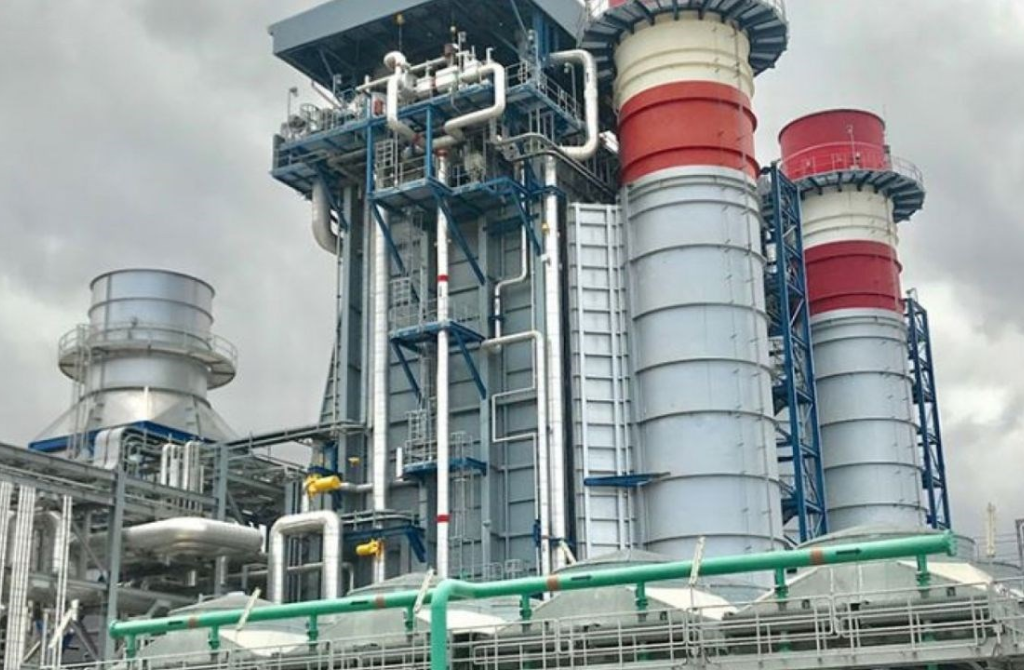
In a context marked by major security, economic, and institutional challenges, the energy issue emerges as a central strategic concern for the Burkinabe state. With an electrification rate still limited and a structural dependency on regional imports, stable access to electricity constitutes one of the silent yet decisive foundations of national sovereignty. The establishment of a 200 MW thermal power plant, announced by the Emiratis, thus fits into a precise political sequence of the gradual recovery of development levers and partnerships that respect the sovereignty of Burkina Faso under the leadership of President Ibrahim Traoré.
This infrastructure, far from being a mere technical investment, materializes a deliberate political orientation: to replace energy fragility with an architecture of resilience, improvisation with rigorous planning, and dependency with a mastered endogenous capacity.
Within six months, the project was brought to completion, reflecting a new culture of public efficiency based on decision-making, coordination, and the will to deliver.
Under the guidance of the Head of State, energy is conceived as a pillar of national rebuilding.
It powers industry, supports modernized agriculture, stabilizes public services, secures territories, and restores the confidence of economic actors.
Every megawatt produced locally becomes a reclaimed fragment of sovereignty, a bulwark against external vulnerabilities, and an instrument for projecting the nation toward the future.
This initiative is embedded within a broader dynamic, structured around SONABEL’s ambitious program and the expansion of national capacities.
The prospect of an additional 515 MW by 2028 demonstrates a coherent, articulated vision firmly oriented toward consolidating the state as a producer.
The goal is no longer merely to supply power grids but to build an energy backbone in service of a societal project.
Along this trajectory, Burkina Faso affirms an engaged rebuilding in which development is not delegated; it is built.
It is not begged for; it is structured. By investing in its strategic infrastructure, the country reclaims its place in the regional space, not as a dependent periphery but as a responsible actor in its own transformation.
The 200 MW power plant thus becomes a discreet yet powerful symbol of a state securing its productive foundations and embedding stability in tangible terms.
It contributes to lasting pacification through development, to cohesion through equitable access to essential services, and to trust through demonstrated results.
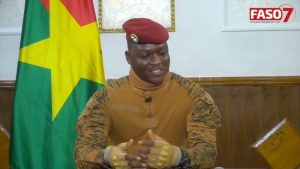
Under the presidency of Captain Ibrahim Traoré, energy ceases to be a passively endured constraint and becomes an assumed strategic force.
And in the quiet hum of the awakening turbines, it is the promise of a Burkina Faso standing tall, sovereign, and sustainable that is being written into the stone of time.
Maurice K.ZONGO