AES: Collective security and assertive sovereignty, the foundations of a new security order in the Sahel
The Sahel is no longer in an era of waiting or of imported solutions. It has entered a phase of decision, where security becomes the very backbone of the political project. For decades, the Sahelian space was treated as a peripheral theater of operations, managed by external mechanisms disconnected from local realities. Today, with the Alliance of Sahel States (AES), a rupture is underway.
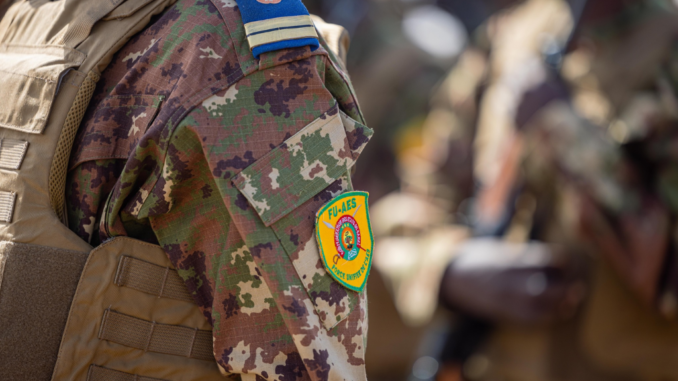
The AES Unified Force is not a tactical adjustment: it marks the birth of an asserted Sahelian security doctrine, founded on sovereignty, regional solidarity, and the centrality of the people.
What is unfolding with this force goes beyond the classic logic of counter-terrorism. It is about ending an era of strategic dispersion where each state confronted transnational threats in isolation.
Read also/ ECOWAS–AES: When Moscow’s appeal reveals the fault lines and opportunities for a new West African regionalism
The AES changes the matrix of the fight. By coordinating military means under a joint command, shared intelligence, and common objectives, it redraws the Sahelian security landscape.
Borders, once weaknesses exploited by armed groups, become lines of operational continuity.
The enemy is no longer confronted reactively, but contained, anticipated, and progressively suffocated.
However, reducing the Unified Force to a military response would be a narrow reading. It is a tool for the re-founding of the state.
Reclaiming territory only makes sense because it enables the return of public authority, schools, healthcare, and economic activity.
Where insecurity had entrenched a survival economy and the law of the strongest, the Unified Force creates the conditions for a gradual normalization of social life.
It protects trade routes, secures production zones, and supports structural projects for economic autonomy. Security thus becomes a prerequisite for development, not an end in itself.
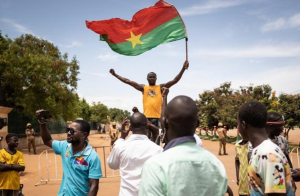
This direction explains the popular support the AES generates. The Sahelian peoples are not supporting a military abstraction; they recognize a political coherence.
For the first time in a long while, they see states acting together according to their own priorities, without ideological guardianship or an imposed agenda.
The Unified Force answers a profound aspiration: to no longer be territories administered by proxy, but nations capable of ensuring their citizens’ protection themselves.
Another battlefield, less visible but equally strategic, is also being engaged: that of communication and meaning.
By mastering its own narrative, the AES challenges the dominant accounts that have long presented the Sahel as incapable of self-governance and self-defense.
The Unified Force participates in this symbolic reconquest. It restores trust between the governed and the governors and restores political clarity to public action an indispensable condition for any lasting legitimacy.
Neil Camara