AES: A strong sovereignist dynamic serving the future of the Sahel
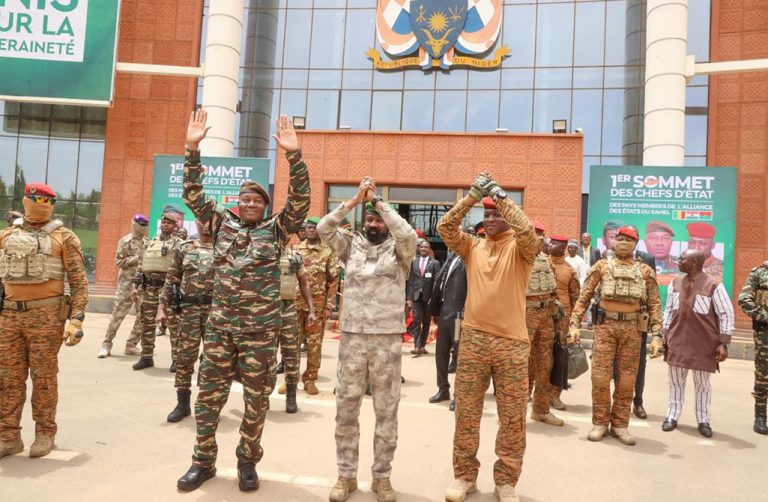
The leaders of Mali, Burkina Faso, and Niger will gather in Bamako on December 22 and 23 for a crucial summit of the Alliance of Sahel States (AES). This meeting, which is set to appoint a new president of the organization, is far more than a routine gathering. It marks a moment of assessment and affirmation for an alliance born from a shared determination: to reclaim control of their collective destiny in the face of unprecedented security, diplomatic, and developmental challenges.
Founded in 2023, the AES quickly established itself as a major geopolitical reality. It is the concrete realization of a declared pursuit of sovereignty by its three members.
Their approach is driven by a shared understanding: the necessity of finding autonomous, regional, and collective solutions to threats that ignore borders.
The fight against terrorism has thus become the primary foundation of this cooperation, with the establishment of joint military operations and a unified force, demonstrating a collective assumption of responsibility in confronting insecurity.
But the ambition of the AES extends well beyond the security sphere. Its leaders are working to build the pillars of deep integration in service of their peoples. The creation of shared institutions is the most tangible proof of this.
The development of a confederal passport and biometric ID card symbolizes this commitment to creating a space of free movement and common belonging.
On the economic front, the future Confederal Investment Bank, with an initial capital of 500 billion CFA francs, aims to finance transformative projects and free the region’s development from external financial dependence.
This quest for sovereignty is also forcefully expressed on the international stage.
The three nations have coordinated their diplomatic positions to “speak with one voice,” as evidenced by their concerted withdrawals from the Economic Community of West African States (ECOWAS) and the International Organization of La Francophonie (OIF).
These strong gestures, though controversial, are presented as necessary breaks with regional orders perceived as ineffective or subservient to foreign powers. They mark a strategic reorientation and a search for new partnerships.
Therefore, the Bamako summit is more than a transfer of leadership. It is an opportunity to recognize the determined trajectory of three nations that, through the strength of their union, are redefining the terms of their security, development, and place in the world.
By choosing the path of confederal integration, Mali, Burkina Faso, and Niger are laying the foundations of a collective sovereignty, offering a unique model of resilience and solidarity in the face of adversity.
Neil Camara