Togo receives major Japanese Donation, Reinvesting Food Aid into Agricultural Development
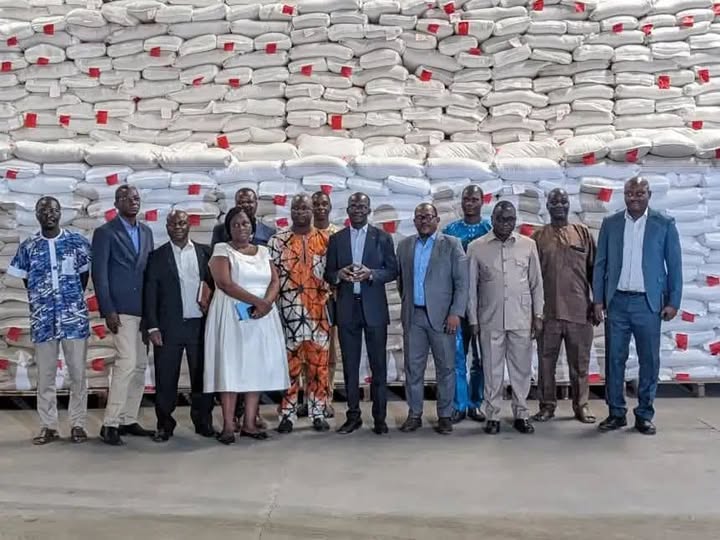
Togo has recently received a substantial new donation from Japan under a longstanding partnership. A shipment of 1,625 tons of white rice arrived at the port of Lomé, provided by the Japanese government through its “Kennedy Round” (KR) food aid program.
This support directly bolsters food security for vulnerable populations while also serving as a financial catalyst for strategic investments in Togolese agriculture.
In line with the well-established mechanism of this program, the rice will be entrusted to Togo’s National Food Security Agency (ANSAT). After storage, it will be gradually released onto the local market at a subsidized price, making it accessible to the most vulnerable households across the country.
The innovation and sustainability of this system lie in the use of the revenue generated by these sales. Far from being a one-time consumable aid, every bag of rice sold is transformed into capital for the future.
The funds are, in fact, reinvested into agricultural development projects, thereby creating a virtuous cycle. “This model transforms food aid into lasting investment for agricultural sectors,” explain Togolese authorities.
The results are already tangible: thanks to past KR funding, Togo has been able to develop Planned Agricultural Zones (ZAAP) and acquire essential equipment, such as tractors, thereby strengthening the productivity and resilience of its farmers.
This new donation is part of a long-term cooperation between the two countries. Since joining the Kennedy Round program in 2008, Togo has received over 33,000 tons of Japanese rice. This mechanism, championed by Tokyo, is one of its key cooperation instruments, aiming to support its partners while promoting progressive empowerment.
The reception of this shipment is therefore much more than a simple logistical operation. It symbolizes an effective synergy between emergency aid and a medium-term development vision.
It enables Togo to address an immediate consumption need while feeding a dedicated fund for modernizing its agricultural sector a pillar of its economy and a guarantee of its food sovereignty. This model of intelligent partnership illustrates how international assistance can be channeled to build solid and lasting foundations for national growth.
Kodjovi Makafui