Sudan/Cameron Hudson’s sorrow: When Washington rejected al-Burhan
Dr. Osama Ahmed El-Mustafa
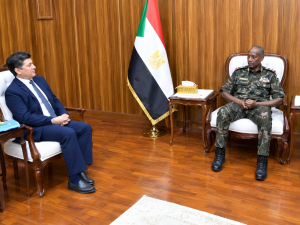
Cameron Hudson: From Sudanese analyst to voice in the campaign to burnish the power of Port Sudan? The U.S. refusal to issue a visa to General Abdel Fattah al-Burhan to personally participate in the meetings of the United Nations General Assembly was not just a passing protocol detail. The incident came at a highly sensitive moment in the Sudanese war, at a time when Washington is pushing for a ceasefire, while air strikes and drones continue, serious accusations of the use of banned weapons are growing, and the humanitarian catastrophe is widening.
According to international reports, the issue was not just an administrative delay; Sudanese and Western sources reported that 2 the issuance of the visa appeared to be linked to al-Burhan’s acceptance of a US proposal for a 90-day ceasefire. Sudan’s mission to the United Nations has requested the intervention of SecretaryGeneral Antonio Guterres, while the United Nations has expressed “grave concern” over the non-issuance of the visa. Here arises the question that deserves to be addressed:
The man who has emerged in recent years as one of the most active voices on the Sudanese file, who previously held positions in the U.S. administration and served as an adviser and aide to a number of U.S. envoys to Sudan, is no longer just a distant observer of the conflict. He writes, analyzes, appears in media outlets, and has participated in international briefings, including a briefing to the Security Council in December 2025 at the request of the Sudanese government. This is precisely what makes his role to be held accountable legitimate. When the Analyst Becomes Part of the Battle.
The problem is not that Cameron Hudson has an opinion. Any American scholar or analyst has the right to criticize American policy, to advocate for a cessation of war, and to hold any side responsible for crimes and abuses Hudson himself even wrote and criticized the United States, spoke about the responsibility of the international community, and criticized the Rapid Support Forces and their supporters while 3 supporting the Sudanese army, which continued to use chemical weapons and drones against civilians, but the problem begins when the analyst turns from an observer of the conflict to a party in engineering the political narrative around him.
According to the public record, Hudson appeared before the Security Council in December 2025 at a briefing requested by the Sudanese government, and provided an analysis of the war, advanced weapons, drones, and external support to the warring parties, hence the question becomes more specific Who hosts? Who pays? Who coordinates? Who sets the message? Who politically benefits from the presence of a well-known American analyst in an international forum alongside the Port Sudan government’s Machiavellian narrative of opportunistic Machiavellianism?
These are not criminal accusations, but legitimate transparency questions, especially when it comes to a war that has left one of the biggest humanitarian disasters in the world, the tragedy of Sudan is not a matter of public relations, Sudanese are not living the war on television, they are living it under bombardment, under the threat of marches, among the ruins of cities, in displacement camps, and in queues for food and medicine.
Recent reports indicate that the war has turned into a conflict that relies heavily on drones and long-range weapons, with large numbers of civilians and invisible weapons killed, and Hudson himself has spoken in previous reports about the widespread use of drones and sophisticated weapons by both sides of the war, and it is precisely at this point that the paradox lies, how can Sudan become a testing ground for modern military capabilities, while at the same time being invested in the battle of the political narrative as Hudson does? And who is paying the price? And not Abdel Fattah al-Burhan.
And not any official sitting in an air-conditioned auditorium or in a political office far from the lines of fire, who is paying the price is the innocent Sudanese citizen.
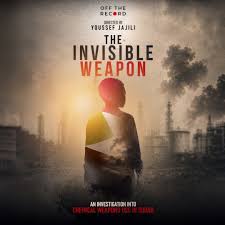
As for the issue of chemical weapons, it is too dangerous to be used in political disputes or counter-propaganda, it is too dangerous to turn into a bidding ground, in September 2026, American and international press reports appeared talking about the use of chemical weapons by the Sudanese Armed Forces, and about the existence of a known secret stockpile, and for this precisely the professional position should be clear in it, and where is the role of the Prime Minister of the Government of Port Sudan If any Sudanese party uses a chemical weapon, it is a crime that must be investigated internationally and those responsible must be held accountable, and if the evidence is insufficient, then an independent scientific investigation must also be conducted before judgments are issued.
Sudanese death should not be turned into 5 propaganda for any party as Cameron Hudson, his hired opportunist companion Janet McElgott does, nor should the word “chemist” be used to terrorize the world without an independent investigation, nor should any real evidence be buried because its disclosure harms the image of a political party.
Cameron Hudson and the duplicity that is worth asking, Hudson is not a current employee of US President Donald Trump’s administration, and does not have an official mandate to speak on behalf of the White House or the US State Department.
Public sources know him as an independent political analyst, and he has previously worked in US government institutions and in the files of special envoys to Sudan. This detail is important, because his appearance in international forums may give the ordinary viewer the impression that he is speaking from within the circles of American decision-making, when in fact he is speaking as a former analyst and expert, and not as a current American official. Do some Sudanese superficial actors use the name “American expert” to give American weight to their political narrative?
If so, does Hudson realize that he may turn from an analyst into a tool in a public relations campaign? These are legitimate questions, and they don’t need to betray anyone. Political regimes in times of crisis have always known the value of the image, and then recycling 6 these images and statements inside and outside Sudan as an international testimony to the legitimacy of the official narrative, but politics is not an image, and war is not a press conference. Legitimacy is not made by an American analyst, nor is it made by a foreign consultant, and public relations cannot erase the effects of bombing, displacement, and death.
The great irony is that Cameron Hudson himself has repeatedly spoken about the failure of the international community to protect the Sudanese. In April 2026, he wrote that the Sudanese people are paying the “worst price” for the war, and spoke of the hundreds of civilians killed in the drone strikes and about the widespread food insecurity and poverty.
The most difficult question is, does what he says about the suffering of the Sudanese be consistent with the political parties and paths he chooses to approach, and is the media in Port Sudan complicit in these clear deals?
This is precisely where political opportunism must stop at its borders, because Sudan does not need more mediators looking for influence, no experts looking for a job in the smart U.S. administration, no politicians looking for an image, no groups that rent pens to burnish its image, the new Sudan needs to stop the war, it needs to protect civilians, it needs to open humanitarian corridors, it needs an independent investigation of all war crimes, including any use of chemical weapons, and it needs to hold accountable all those who killed, tortured, abandoned, or bombed civilians.
Perhaps the most telling development in this story is that Washington itself has become more outspoken in dealing with the war, and that Washington will raise the cost of continuing the war on the parties and the networks that feed it, and this message is bigger than a visa, it says that Washington does not want the war to continue, and therefore the denial of Al-Burhan’s visa, is not just a diplomatic embarrassment to a particular person, but part of a political pressure linked to the course of the war and the ceasefire.
As for al-Burhan, who fainted, he said in an article published by (Foreign Policy) that he rejects external directives on the war, considering that previous truces were not helpful for the terrorist Islamic Brigades militias in reorganizing their ranks, and here the two wills clash.
The Sudanese military leadership says that it does not want a cessation imposed on it from abroad. Between the two positions stands the Sudanese people.
If there is indeed grief, it should not be the grief of a man who has lost a political or career opportunity, but rather the grief of the millions of Sudanese who have lost their homes, security, children and future.
The question that must be asked to everyone who speaks on behalf of Sudan, everyone who writes about it, and everyone who invests in its crisis, is what did you do to end the war? Not how many publications were written.
How many officials did you interview, how many Sudanese did you save? How many children did you protect from the march? How many families did you bring home, how many shots you stopped and how many facts did you tell even when it was painful for your ally?
This is the real trial, but for the death of the Sudanese to become a platform for political rise, the war a market for experts, and blood 8 a path to jobs, contracts and influence, this is not politics. This is opportunism.
If Washington has decided to make Al-Burhan’s visa a pressure card for a ceasefire, the most important message that should reach all the players is that the time for buying the image is over, the new Sudan is no one’s job, the Sudanese are not fuel for anyone’s ambition, and whoever wants to speak in the name of peace, let him start by stopping the war, and Cameron Hudson must realize his grief and the grief of the whole of Sudan and he must wake up from his machiavellation.