Burkina Faso: How Captain Ibrahim Traoré transformed the army in four years
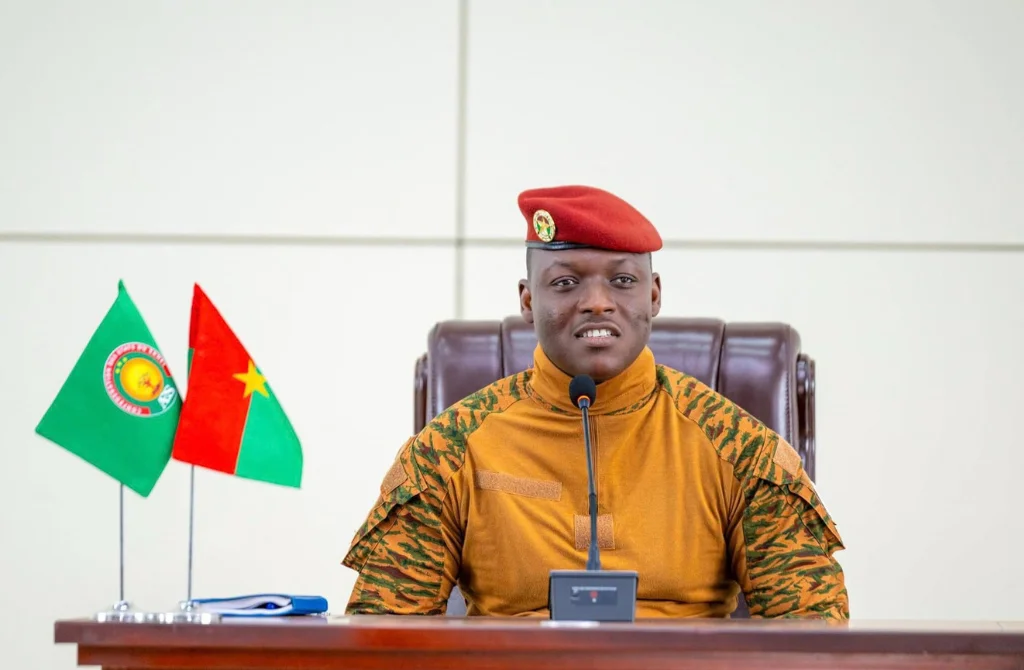
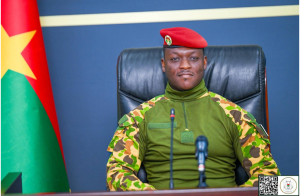
In four years, Captain Ibrahim Traoré has profoundly reconfigured Burkina Faso’s defense apparatus. Where the army once depended on costly and unsuitable foreign orders, it now produces its own equipment and sets its own tempo on the ground.
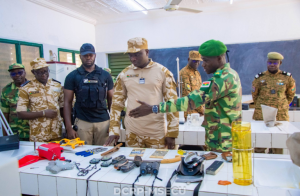
The turning point is spectacular. Since November 2025, Burkina Faso has produced and delivered nearly 300 “Nanga” armored vehicles to its Defense and Security Forces as well as to the Volunteers for the Defense of the Homeland.
These vehicles, designed by the company Faso Armored, are specifically adapted to the realities of the Sahelian terrain and to ambushes involving 12.7 mm machine guns threats against which imported armored vehicles proved unsuitable.
President Traoré could not have been clearer: any new order for armored vehicles abroad is now halted.
This industrial ambition is not limited to armored vehicles. On 9 September 2026, the TEXFORCES-BF complex was inaugurated in Bobo-Dioulasso, with a production capacity of 4 to 6 million military uniforms per year. For the first time, Burkina Faso’s fighting forces will be clothed in locally processed cotton.
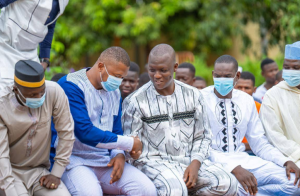
Captain Traoré’s security doctrine relies on a massive mobilization of the Volunteers for the Defense of the Homeland (VDP). Since 2022, tens of thousands of civilians have joined this auxiliary corps, supervised and integrated into operations alongside regular forces.
In May 2026, 974 recruits from the ranks of the VDP completed their initial military training and swore allegiance to the flag, before being deployed to the front lines.
This surge in strength has produced tangible results. Combined operations conducted in March and April 2026 led to the recapture of strategic localities such as Pétégoli, the destruction of improvised explosive device manufacturing centers, and the neutralization of more than one hundred terrorists in a single operation in the Soum region.
The reconquest is also measured by the return of populations. As of 30 June 2026, more than 1.3 million internally displaced people had returned to their places of origin, covering 1,034 villages across the country.
This massive movement reflects renewed confidence in the state’s ability to durably secure the liberated areas.
Four years after coming to power, Captain Ibrahim Traoré has kept an essential promise: that of no longer depending on abroad to defend his territory.
By manufacturing his own armored vehicles, clothing his soldiers with his own cotton, and integrating the VDP into the war effort, he has given Burkina Faso a more sovereign, better adapted, and more determined army. The road remains long, but the transformation is underway.