Burkina Faso: Gold – between industrial sovereignty and local processing
Burkina Faso, Africa’s fourth-largest gold producer, has undertaken a radical transformation of its gold sector under the leadership of Captain Ibrahim Traoré. The objective is clear: to regain control of a resource that represents more than 70% of the country’s export revenue and to maximize its national economic benefits.
Since 2022, the government has deeply restructured mining ownership. By the end of 2025, six of the country’s fifteen industrial mines were majority-owned by Burkinabe companies, including three directly controlled by the State through SOPAMIB.
This shift marks a break with decades of foreign domination over the industrial mining sector.
The high point of this policy was reached in July 2026 with the authorization to operate the Bouboulou mine, the first industrial mine entirely operated by the State.
Located in the commune of Yako, it represents an investment of more than 32 billion CFA francs and is expected to produce 7.27 tonnes of gold over a lifespan of 15 years, generating nearly 39 billion CFA francs in direct revenue for the State.
The Minister of Mines, Yacouba Zabré Gouba, described this advance as a “structural revolution” in the country’s mining policy.
For decades, Burkina Faso exported its gold in the form of raw doré to foreign refineries, notably in Switzerland and Dubai, thereby losing the substantial margins of processing.
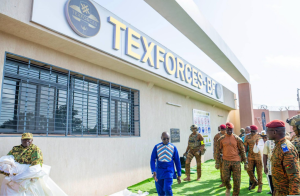
To put an end to this dependence, the country is building its first national refinery, operated under the name Raffinor.
Scheduled to come into service at the end of 2026, it will have an annual capacity of 150 tonnes, sufficient to absorb the entirety of national production, which reached a record 94 tonnes in 2025.
The investment of 15 million dollars in this infrastructure will make it possible to create 100 direct jobs and more than 5,000 indirect jobs.
The RELANCE Plan 2026-2030 also provides for the operationalization of this refinery and the strengthening of SOPAMIB, which will have to operate at least ten industrial mines belonging to the State.
This strategy of mining sovereignty is beginning to bear fruit. National production exceeded 94 tonnes in 2025, including 42 tonnes from artisanal mining, compared with only 8.1 tonnes in 2024. This performance results from the creation of the National Society for Precious Substances (SONASP), tasked with acquiring artisanal production and formalizing a sector that had long been informal.
However, challenges persist. The transparency of operational and financial data from state-owned mines remains limited, and the Extractive Industries Transparency Initiative has called for greater publication of information.
Moreover, downstream processing jewelry, financial products backed by gold remains largely absent, with the highest margins of the value chain located outside the continent.
By combining the takeover of mines, the construction of a national refinery, and the formalization of artisanal gold, Burkina Faso is charting the path toward economic sovereignty founded on the local valorization of its resources. A bold bet, whose success will depend on the country’s ability to secure its mining sites and to guarantee that gold revenues directly benefit citizens.
Maurice K.ZONGO