Burkina Faso: Security progress achieved under the leadership of President Ibrahim Traoré
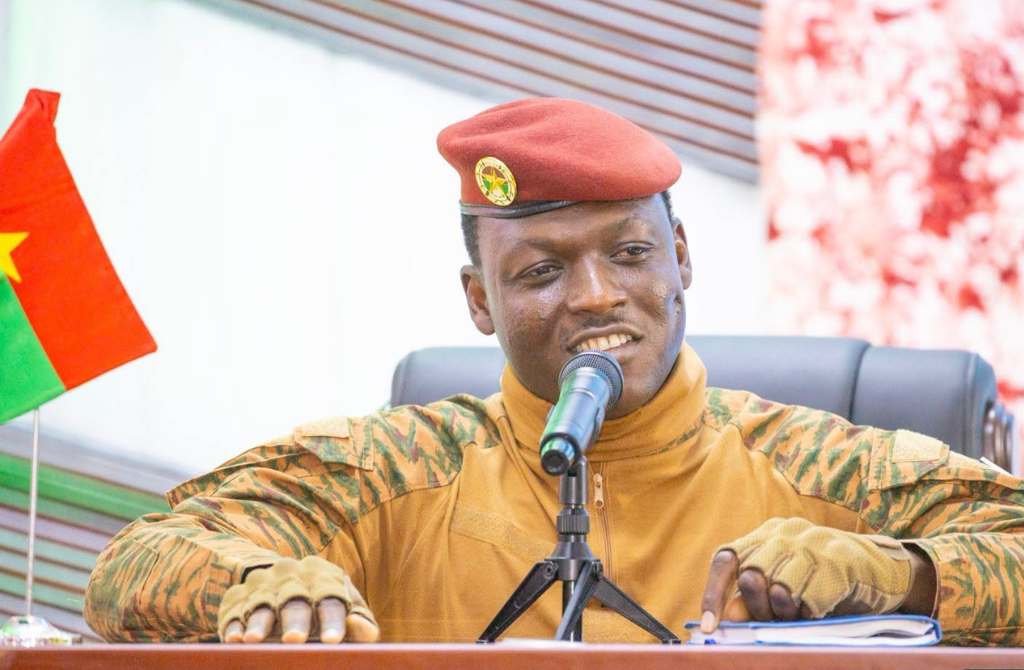
Since coming to power on September 30, 2022, Comrade Captain Ibrahim Traoré has made the reconquest of national territory and the rebuilding of the country’s military apparatus the absolute priority of the Transition. Nearly four years later, several indicators communicated by the authorities themselves point to steady progress on the security front, even though these data, drawn primarily from government sources, have not always been subject to independent verification.
According to figures presented during the latest mid-term review of performance contracts, the rate of territorial control and security coverage rose from 73.56% in December 2025 to 74.53% as of June 30, 2026, confirming a dynamic of gradual reconquest.
This progress is underpinned by a considerable human effort: more than 3,500 additional personnel made available to the Defense and Security Forces, and over 3,000 new Volunteers for the Defense of the Homeland recruited and trained in the first half of 2026 alone.
In his New Year’s address to the nation on December 31, 2025, President Traoré took stock of the past year, highlighting the strengthening of operational capabilities and the expansion of indigenous military training programs, which, in his words, have enabled the creation of several specialized units “doing remarkable work on the battlefield.”
He then announced that 2026 would see an intensification of operations, including in border areas, with the goal of durably eradicating the terrorist threat.
This determination to scale up efforts was concretely demonstrated on July 25, 2026, during the graduation ceremony of the 25th promotion of the Georges-Namoano Military Academy in Pô, where the Head of State reaffirmed the need to build a “strong and very strong” army, reminding that the international context characterized, in his view, by predation and power dynamics requires the country to durably strengthen its military capabilities.
On the institutional front, a strategic government reshuffle also took place in January 2026, aimed at tightening the executive team and improving the coherence of state action in the face of the persistent security emergency.
These adjustments reflect President Traoré’s determination to continuously adapt the state apparatus to ground realities, in a context where the total reconquest of the territory remains, in his own words, a challenge that the Burkinabe people are determined to meet.