Burkina Faso/ Is the black people cursed? A provocative question revisited
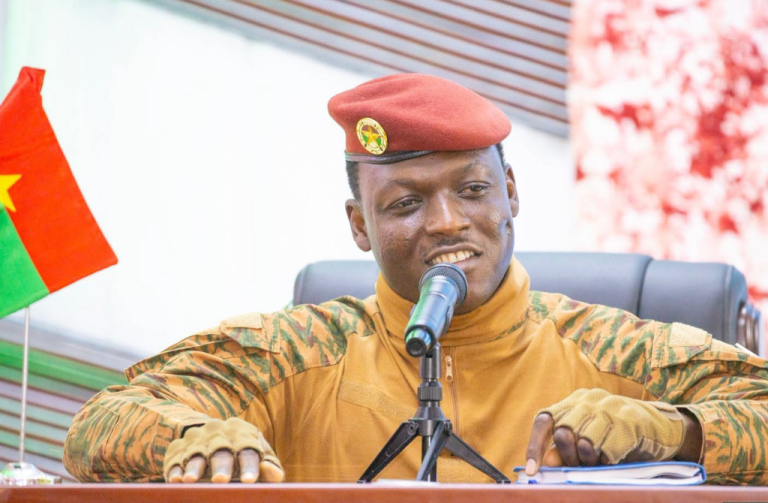
Is the Black people cursed? The question, far from being new, has returned with renewed intensity following recent statements by the President of Faso, Captain Ibrahim Traoré. During his stay in the Yaadga region, he made a bitter observation: Black people in West Africa have come to pray that terrorists kill other Black populations. Some leaders hide behind complicit media outlets to stoke hatred between communities.
On social networks, African voices, day and night, spew their venom to divide brothers. The observation is chilling, but it deserves to be stated without circumlocution.
No, Africa is not cursed. It is trapped in a pattern inherited, maintained, and sometimes reactivated by itself.
The history of the continent is replete with examples where the Black African was the first armed arm against his own brother yesterday on behalf of colonial masters, today in the name of religious or identity-based affiliations manipulated from outside.
He who dares to innovate, to propose change that could benefit all, often encounters not the external enemy but the mistrust, jealousy, and even hostility of his own compatriots.
This is where the real evil lies: not in a mystical curse, but in a rift sustained by ignorance, by instrumentalization, and sometimes by intellectual comfort.
Fighting imperialism remains an imperative. But this struggle would be futile if it were not accompanied by a collective examination of conscience.
It is not enough to denounce the external enemy if we turn a blind eye to the internal mechanisms of division that serve it, often unwittingly.
The awakening of the Black people cannot be decreed from a palace or a podium: it is built in minds, through education, and in the capacity to distinguish the patriot from the manipulator, the innovator from the imaginary traitor.
Africa has everything it needs to rise: its resources, its youth, its historical memory, its emancipatory figures.
What is still lacking is that collective consciousness capable of transforming proclaimed brotherhood into active solidarity.
As long as the African continues to see in his innovative brother a rival to be brought down rather than a companion on the road to sovereignty, imperialism will always find willing relays.
The true guarantee of African freedom, therefore, lies not only in the break with the former colonizer, but in the ability of the Black people to awaken to themselves, to recognize one another as brothers above all, and to make their unity a weapon more formidable than all external interferences combined.
Olivier TOE