Burkina Faso: Public health – a priority that the government is turning into concrete action
In Burkina Faso, the health of the population remains a matter on which the State does not compromise. Alongside the reconquest of national territory, the authorities are multiplying investments to equip liberated zones and the entire country with modern health infrastructure, illustrating a vision where security and social development advance hand in hand.
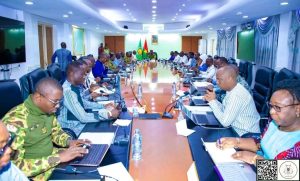
This ambition has been translated, in recent months, into strong decisions. Meeting in the Council of Ministers on June 4, 2026, the government approved a major investment program of 24.67 billion CFA francs, fully funded from the national budget, aimed at building new health infrastructure and acquiring cutting-edge medico-technical equipment: scanners, modern operating theaters, analysis laboratories, and intensive care units.
The objective is clear: to bring health services closer to the populations, including in areas furthest from major urban centers.
These efforts are part of the continuity of the Project for Strengthening Primary Health Care for Improved Health and Nutrition (PRSS-ASN II), launched in November 2025 with a budget of 170.3 billion CFA francs for the 2026–2031 period.
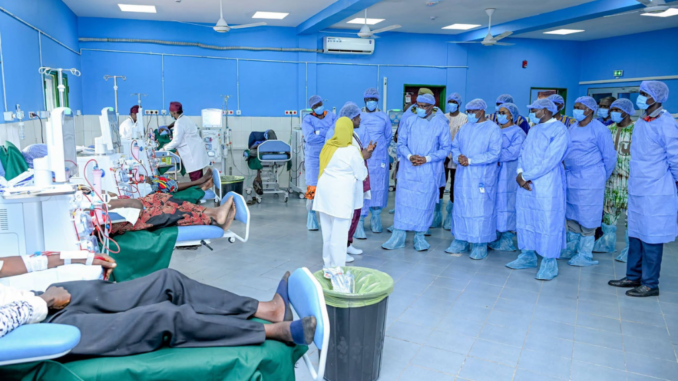
This structuring program provides for the construction of health centers, the establishment of hemodialysis centers, the deployment of mobile clinics, as well as the strengthening of emergency services through the SAMU (emergency medical service).
The year 2025 was also marked by a notable ramp-up of specialized infrastructure, with the inauguration of the Pala University Hospital, the Bobo-Dioulasso radiotherapy center, and the Gaoua hemodialysis unit.
At the local level, 20 primary health centers (CSPS) were built and 25 others were promoted to municipal medical centers.
In 2026, priority is being placed on completing the Gaoua University Hospital, already 78% finished, as well as launching the Fada N’Gourma University Hospital.
Beyond infrastructure, the State has also invested heavily in training healthcare personnel, through the “1000×5” plan, which has enabled the specialization of 2,000 health executives, thereby sustainably strengthening national medical expertise.
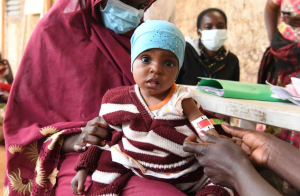
These efforts are complemented by large-scale prevention actions, with the distribution of 15 million mosquito nets and the full vaccination of 750,000 infants so many decisive bulwarks against infant morbidity.
This comprehensive dynamic, combining infrastructure, equipment, and training, illustrates a clear determination on the part of the Burkinabe authorities: to make public health an essential pillar of national sovereignty, in service of a people who have the right to live with dignity, wherever they may be on the territory.