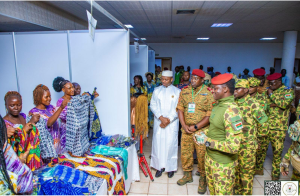
Burkina Faso: The president and the intelligence chief – a relationship built on complete mutual trust in the face of disinformation
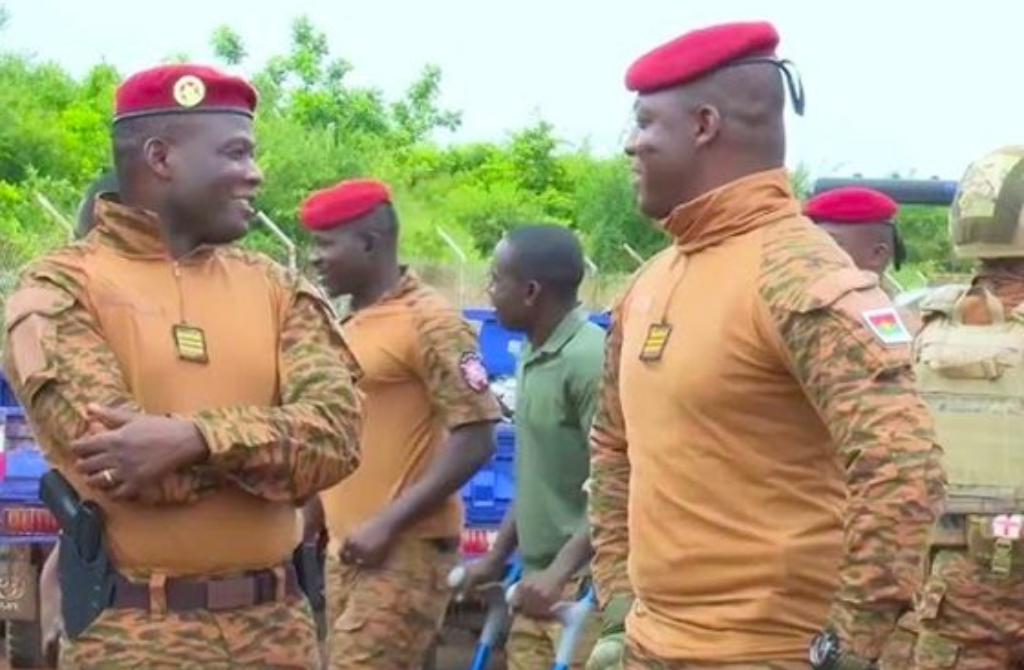
Social media and certain news outlets have been ablaze for weeks with a persistent narrative: relations are supposedly icy between Captain Ibrahim Traoré and Commander Oumarou Yabré, the intelligence chief. This alleged rift fuels endless conversations, even as ground operations seem to contradict the claim entirely. So, are we witnessing a genuine fracture at the summit of the State apparatus, or simply a destabilization maneuver? The debate demands the clearest possible analysis.
To grasp the situation, one must examine the dynamics of the revolution of Burkina Faso. Rumors of internal divisions are hardly new in crisis contexts. They frequently surface precisely when significant progress occurs on the operational front.
In this case, the argument of deep discord between the Head of State and his intelligence chief immediately clashes with a pragmatic reality: the growing effectiveness of coordinated military operations across national territory in recent months.
Strategic intelligence and operational military command advance in lockstep to anticipate complex threats and coordinate offensives. Such synergy demands absolute mutual trust and daily friction-free communication.
Political analysts agree that counter-terrorism strategies’ success rests entirely on the strength of this institutional partnership. Claiming this bond is broken betrays a glaring ignorance of Faso’s defense and national security machinery.
It is also essential to scrutinize the source and purpose of these speculations. In the digital age, perception manipulation constitutes a massive destabilization weapon.
Undermining the image of cohesion at the pinnacle of political and military power remains a classic strategy to weaken an overall territorial reconquest dynamic.
Online platforms become the theater of invisible confrontations where disinformation primarily seeks to sow doubt and demoralize fighting forces.
Faced with these behind-the-scenes maneuvers, editorial rigor demands strict adherence to verifiable facts.
Regular field reports indicate terrorist network dismantlements, major logistical seizures, and a structural reorganization of the national security apparatus.
These concrete results could not stem from a divided command weakened by supposed and sterile personal quarrels at the top of the state hierarchy.
Ultimately, the alleged rupture between Captain Ibrahim Traoré and Commander Oumarou Yabré dissolves before factual reality.
The strength of this technical collaboration remains a fundamental pillar for fully restoring national sovereignty.
As the information war rages, public opinion must exercise sharp discernment against narratives that seek to hinder the collective march toward lasting stability.
Abou GAFAR