Burkina Faso’s tomato export ban: A strategic move for economic sovereignty
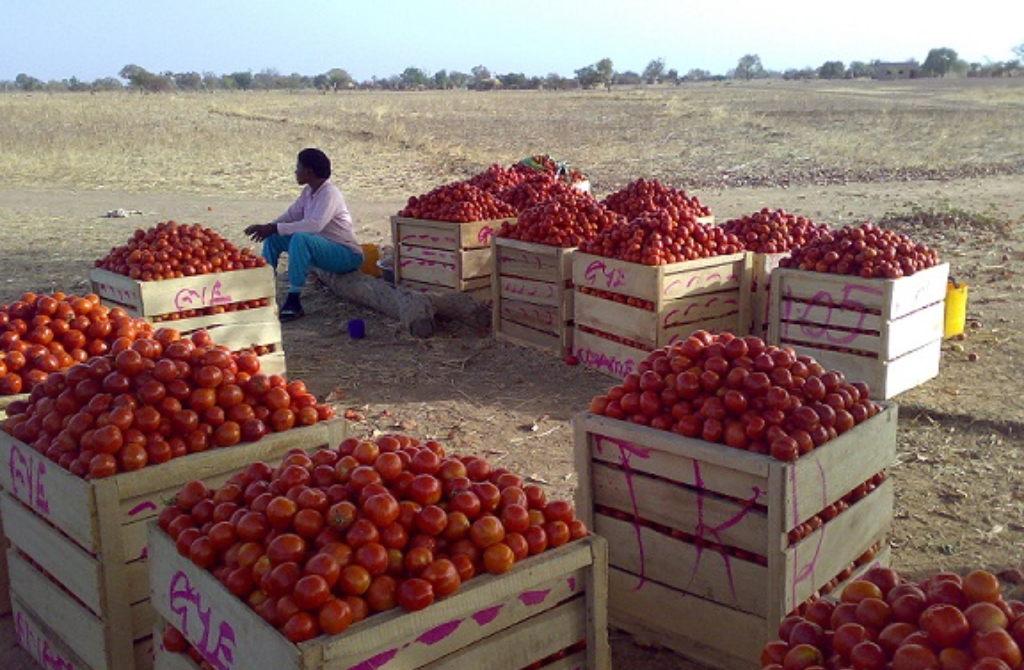
Burkina Faso’s decision to suspend fresh tomato exports represents a deliberate choice in economic governance. It addresses a structural necessity: ensuring regular supply to local processing units and implementing, in practice, an industrialization policy long proclaimed but rarely pursued with such clarity.
Under this direction, the vision championed by Captain Ibrahim Traoré gains coherence. The state no longer merely accompanies the market it redefines it.
By retaining production within national territory, it replaces an immediate export logic with an internal valorization strategy.
The measure is simple in its formulation but demanding in its implications. It requires discipline, adaptation, and reorganization of economic circuits.
The expected effects are direct. Industrial units, often facing chronic raw material shortages, now benefit from a stability lever. This secured supply enables realistic production scaling.
It also creates conditions for a more robust industrial fabric capable of generating sustainable employment and structuring an entire sector, from agricultural upstream to commercial downstream.
The constraint imposed on exporters reveals, implicitly, a deeper transformation. The state’s role is evolving. It no longer limits itself to regulation it now directs and decides.
The transition period granted demonstrates a desire to frame without disrupting, but the firmness of sanctions confirms that industrial priority now prevails over particular interests.
The reallocation of seized shipments to local units illustrates a logic of productive recovery, where no resource should escape national strategy.
This measure fits within a broader movement observed across the continent. Several African states seek to regain control of their value chains.
Burkina Faso advances here concretely, targeting a specific product and activating a clear regulatory instrument. The approach is pragmatic, almost methodical.
The question of sustainability remains. Local transformation requires a coherent environment: strengthened agricultural production, adapted infrastructure, competitiveness of finished products. Without this ecosystem, the decision could lose its impact. But if these conditions are met, it can produce significant ripple effects.
By choosing to keep tomatoes for domestic processing, Burkina Faso asserts a clear direction. Value no longer exports in raw form.
It is built locally, through patient, structured, and resolutely sovereign effort. An inflection that, if sustained, could transform each harvest into an act of economic empowerment.
Maurice K.ZONGO