Mali: The Mining Fund supporting infrastructure and social programmes
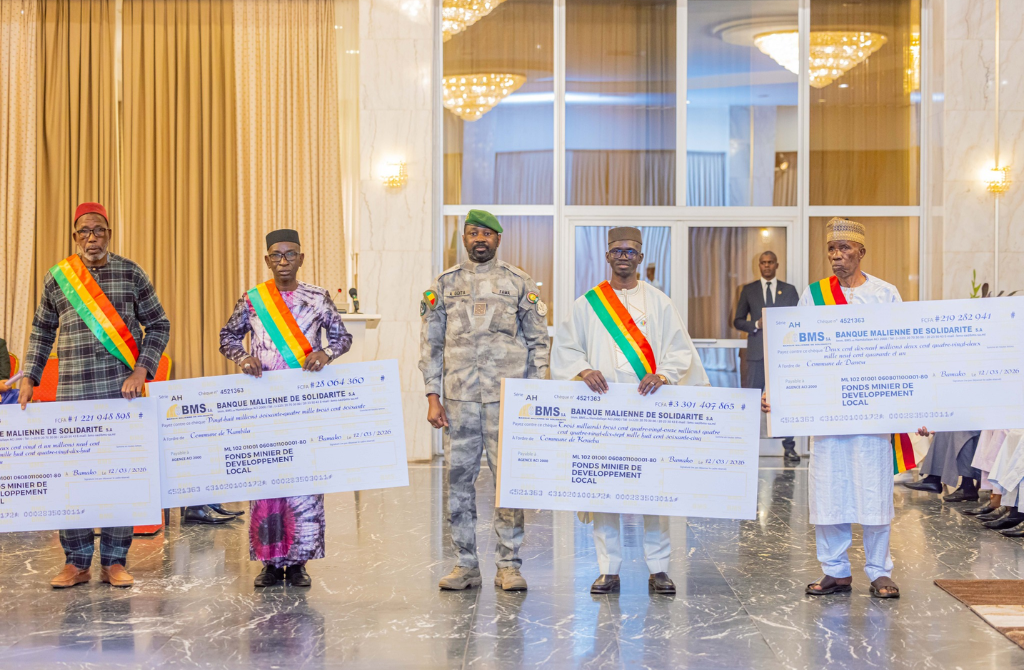
The Malian State has redistributed 18.4 billion CFA francs from the Mining Fund for Local Development to territorial communities. This action constitutes a significant step in the reform of the extractive sector of Mali and is directly part of the implementation of the new mining code, which aims to transform mining revenues into an instrument for territorial development and economic justice.
By reallocating a share of revenues from gold and strategic minerals such as lithium to the concerned municipalities, the State strengthens the capacity of communities to finance infrastructure, social equipment, and local economic projects.
The structuring of the redistribution is methodical: half of the funds directly benefit municipalities in extraction zones, a portion is allocated to peripheral communities, and an equalization mechanism extends the benefits to all regions.
This model ensures that the impact of mining activity extends beyond extraction sites and contributes to national cohesion.
The regulations also provide for funding the fund through mining royalties and a proportional contribution based on the turnover of companies operating in the territory, ensuring the sustainability of this mechanism.
For a country where gold extraction represents a major economic pillar and where new industrial lithium projects are developing, this structural approach to local development reflects an ambitious state strategy.
It addresses a dual objective: increasing the economic benefits of mining exploitation and inscribing this wealth within a logic of social and territorial progress.
The communities, at the heart of implementing these projects, thus see their investment capacities strengthened, in a context where improving access to education, health, water, and energy remains a priority.
Beyond the immediate effect of financial transfers, the reform illustrates the Malian State’s determination to transform the extractive sector into an engine of inclusive and sustainable development.
By redirecting resources towards local populations, it establishes a model where national sovereignty over natural resources translates into a concrete impact on citizens’ daily lives.
This rigorous and structured strategy outlines a framework in which the country’s prosperity is built from the territories themselves.
The redistribution of mining revenues in Mali imposes a vision where the exploitation of natural resources becomes an instrument of social cohesion and sustainable development, firmly anchoring mining policy in the country’s future and in the State’s responsibility towards its citizens.
Neil Camara