Ghana: Agricultural mechanisation at the heart of a strategic partnership with Belarus
In Ghana, agriculture remains an essential pillar of the national economy. The sector contributes approximately 21% of the gross domestic product (GDP) and employs nearly 35% of the working population. Aware of the strategic importance of this field, the Ghanaian government is multiplying initiatives to modernize agriculture and improve farm productivity.
Among the priorities is the strengthening of agricultural mechanization, which is still largely insufficient in the country.
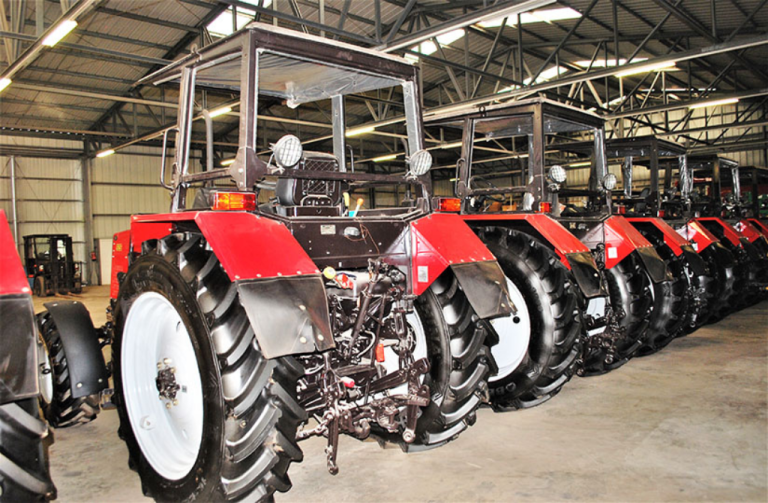
In this dynamic, Belarus plans to ship around 3,000 units of agricultural machinery and equipment to Ghana in 2026. These include tractors, seeders, plows, and other materials intended to facilitate agricultural work.
The information was reported on March 9 by the Belarusian national news agency BelTA, citing the country’s Foreign Minister, Maxim Ryzhenkov.
According to Belarusian authorities, this delivery is part of a broader partnership between Minsk and Accra in the field of agricultural mechanization.
Beyond the supply of equipment, the cooperation also provides for the creation of maintenance centers and the establishment of training programs for Ghanaian technicians and specialists. The objective is to ensure efficient and sustainable use of agricultural equipment.
This rapprochement between the two countries follows an official meeting held on June 6, 2025, in Minsk between Ghana’s Minister of Agriculture, Eric Opoku, and Belarusian Deputy Prime Minister, Viktor Karankevich. The discussions then focused on possibilities for cooperation in developing the agricultural sector and introducing modern technologies.
This initiative comes at a time when the Ghanaian government wishes to accelerate the transformation of its agriculture. The authorities plan in particular to deploy more than 4,000 agricultural machines and equipment in 50 districts starting in 2026. This operation is part of the “Feed Ghana Initiative” (2025-2028), one of the pillars of the national food sovereignty strategy launched in April 2025.
The project also provides for the creation of 50 integrated agricultural service centers. These structures will allow farmers to access modern machinery, technical assistance, and agricultural inputs to improve their yields.
According to authorities, the first 11 centers are expected to be inaugurated in 2026, marking an important step toward the modernization of Ghanaian agriculture. This transformation appears all the more necessary as a study published in 2022 indicated that nearly 78% of agricultural operations in Ghana were still carried out manually.