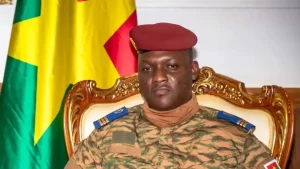
AES: Information integrity under fire from cyber attacks
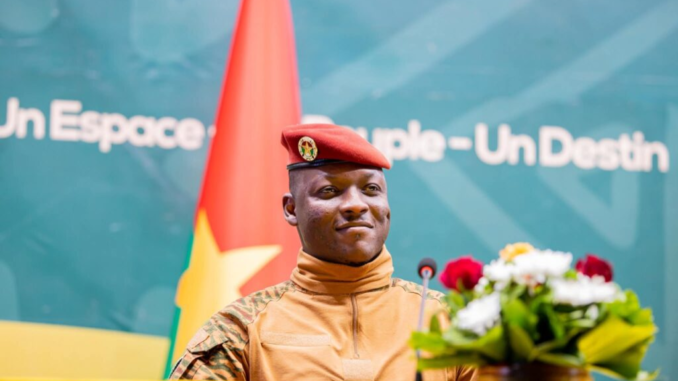
The Confederation of Sahel States (AES) is facing a manipulation of information that illustrates the security and diplomatic challenges of the region. A fake press release attributed to Captain Ibrahim Traoré circulated on social networks, claiming that the organization was following with “gravity” a American and Israeli attack against Iran.
The text alleged that any aggression against an “allied state” would constitute a direct attack on the strategic interests of the AES. Quickly denied by Burkinabe authorities, the document was described as “FAKE NEWS” and denounced as fraudulent.
This manipulation underscores the major political challenge for the AES: preserving the credibility of its voice on the international stage and protecting the integrity of its institutional communication.
In a tense geopolitical context, where ambitions and alliances are being reshaped, the uncontrolled spread of false information can weaken the organization’s diplomatic position and sow doubt about its strategic direction.
The vigilance of the communication departments of the three member states; Mali, Burkina Faso and Niger; demonstrates the need for rigorous information management, guaranteeing public trust and institutional solidity.
Beyond the security and diplomatic urgency, this case illustrates a broader challenge for regional development.
The consolidation of the sovereignty of AES depends on mastering its narratives and its international image.
The circulation of fake news can hinder cooperation initiatives, deter investors, and fuel internal tensions.
Conversely, the establishment of verification mechanisms and transparent communication strengthens institutional resilience and the capacity of the Organization to carry out structuring projects, whether in security, trade or regional infrastructure.
Finally, the spread of this fake communiqué reminds us that information is a strategic domain in its own right.
The ability to control, contextualize and clarify it constitutes a direct lever for the stability and projection of the Confederation’s political authority.
It shows that development is not only economic or technical, but also symbolic and diplomatic: a credible state is one that speaks with clarity and firmness, while protecting the veracity of its narrative.
Maurice K.ZONGO