Burkina Faso / Health: Presidential initiatives have been boosting the sector since 2022
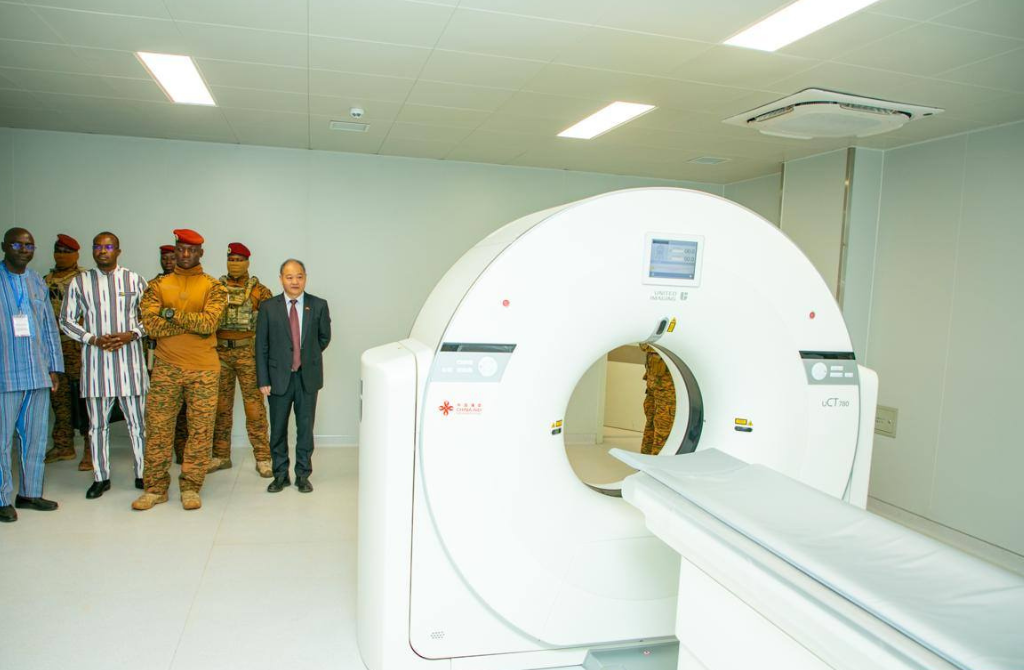
Since the arrival of Captain Ibrahim Traoré in September 2022, Burkina Faso has embarked on a new dynamic of national transformation. Under the leadership of the President of Faso, Captain Ibrahim TRAORÉ, the health sector is among the strategic priorities inscribed within the vision of the popular progressive revolution.
Adopted by the Council of Ministers in July 2024 and formalized by presidential decree, the Presidential Health Initiative (Initiative présidentielle pour la santé, IPS) constitutes the central pillar of this ambitious health policy.
Its overall objective is the sustainable improvement of the population’s health through the construction of modern infrastructure, aiming to enable all Burkinabe to benefit from quality care, wherever they are in the country.
The Head of State’s vision is clear: to provide healthcare to Burkinabe wherever they are, by bringing services closer to the most vulnerable populations.
This ambition responds to a concerning reality: 38% of the population lives more than five kilometers from a health center, and many facilities have had to close due to the security context.
Ultimately, the IPS plans an ambitious construction program including 55 new equipped communal health centers, distributed across all regions of the country. Since January 2025, 25 of these medical centers are already under construction.
Among the major projects is also the creation of a Heart Institute, a first for Burkina Faso, designed to address the growing prevalence of cardiovascular diseases.
Five specialized anesthesia and intensive care units will also be created in referral hospitals to better manage life-threatening emergencies.
The program also includes the establishment of two hemodialysis units, five intensive care blocks, and diagnostic tools for breast cancer.
Molecular diagnosis for breast cancer will be integrated into this plan, with kits available in all regions.
The results are tangible. In one year of operations, the 15 mobile clinics deployed across the 13 regions have conducted 468 community outreach missions.
Over two million women have been sensitized about women’s cancers, and more than 106,000 screenings for precancerous lesions have been carried out. Over 14,200 women over 40 have benefited from free mammography exams.
The State has invested nearly 197 million CFA francs to finance these services for rural and disadvantaged populations, making completely free care the cornerstone of a strategy promoting health equity.
These structural reforms reflect the Head of State’s determination to make health a national priority, by guaranteeing every Burkinabe, regardless of their place of residence or social condition, access to quality care.
A resolute commitment that places human capital at the heart of building a new, sovereign, and prosperous Burkina Faso.
Maurice K.ZONGO