Chad: Sovereignty diplomacy put to the test by Franco-African realignment
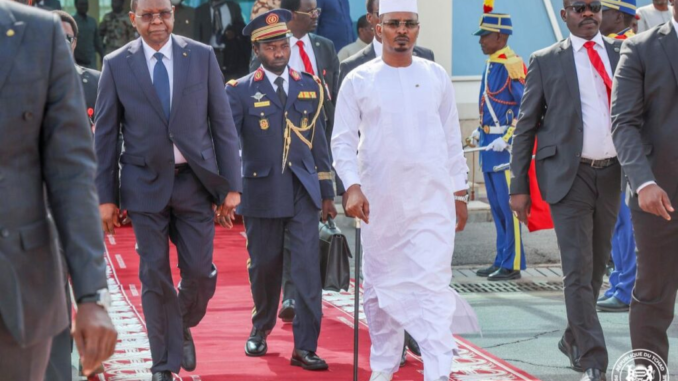
In Paris, beneath the hushed paneling of republican diplomacy, far more than a protocol-driven sequence is unfolding. The official visit of Marshal Mahamat Idriss Déby Itno, two months after the termination of the 2019 defense agreement, marks a moment of strategic recalibration in which Chad; conscious of its geopolitical weight; seeks to redefine the terms of its international engagements.
The challenge is to demonstrate the ability of Central African states to reclaim control of their alliances without severing the thread of history.
This Parisian chapter exemplifies a diplomacy of maturity. By bringing to an end an arrangement inherited from another era, N’Djamena has taken a lucid, deliberate, and sovereign decision.
Far from seeking dramatic breaks or resorting to hollow posturing, the Chadian leadership has chosen a methodical approach: first assertion, then negotiation, and finally reorganization.
The visit of the Head of State to Paris follows this very strategy. This is not about turning back, but about reshaping the future on clearer foundations.
In this renewed dialogue with France, Marshal Déby acts as a Head of State fully aware of his regional responsibilities.
Chad remains a security linchpin in the Sahel, a military pivot, and a discreet yet decisive stabilizing force.
This reality lends his words particular weight. In return, it requires a relationship of equals; free of past asymmetries, built on reciprocity, transparency, and respect for national priorities.
Symbolically, this visit also reflects a desire for political normalization. After tensions, suspicions, and controversies, N’Djamena has chosen the path of responsibility and dialogue.
This choice stems from a nuanced understanding of international dynamics. In a fragmented world, Chad rejects isolation in favor of measured influence.
More broadly, this approach aligns with an emerging Pan-African trajectory, in which states across the continent are asserting autonomous strategic voices; free from outdated guardianships yet open to useful partnerships.
Chad is not aligning: it is asserting itself. It is not breaking away: it is redefining. It no longer simply endures: it proposes.
In Paris, Mahamat Idriss Déby Itno is not negotiating a legacy; he is building a vision for the future. And within this patient architecture of asserted sovereignty lies an enduring lesson: nations that master their narrative ultimately master their development.