Burkina Faso – United Kingdom: Health and education, the new contours of pragmatic cooperation between the two countries
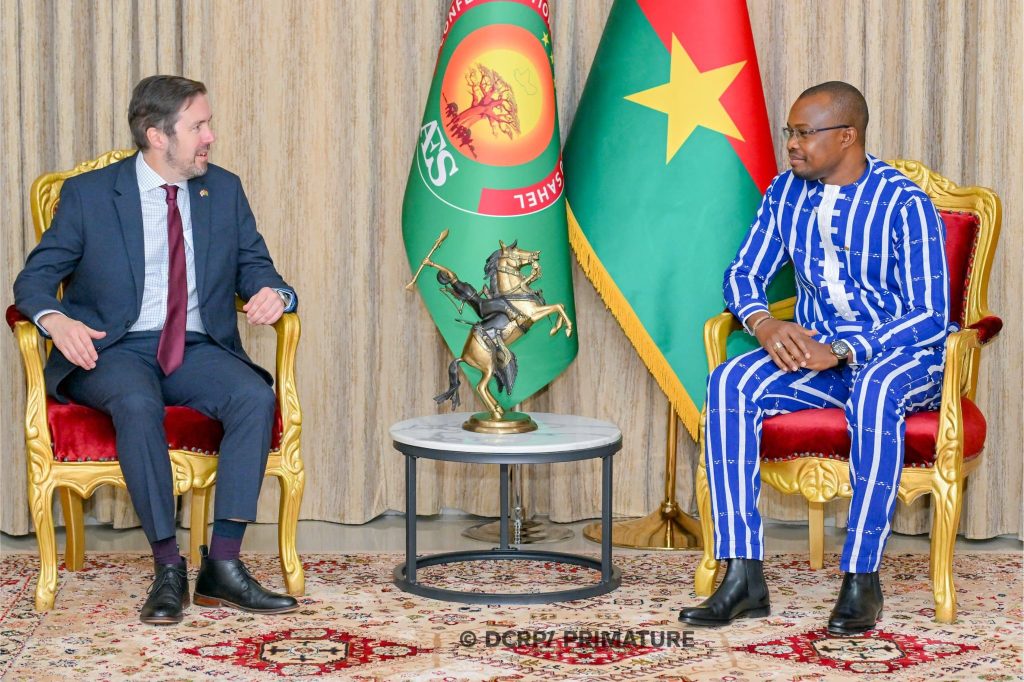
In the evolving diplomatic landscape of West Africa, the partnership between Burkina Faso and the United Kingdom is taking shape on renewed foundations, defined by pragmatism and sovereignty. As the new non-resident British Ambassador, Angus McKee, begins his mission, prospects for cooperation are becoming clearer around key sectors of the development of Burkina Faso, promising reciprocal benefits grounded in practical engagement.
For Burkina Faso, this targeted cooperation addresses immediate strategic needs. In the health sector, British support could focus on strengthening medical capacities through personnel training, equipping health units, or assistance in combating endemic diseases.
Such contributions are crucial for a health system facing profound security and humanitarian challenges.
In education, partnership could bolster technical and vocational training, a vital pillar for Burkinabe youth and the national economy.
This represents not traditional aid, but an investment in human capital a long-term factor for stability and growth.
For the United Kingdom, this recalibrated partnership aligns with a post-Brexit strategy of redeployment and influence, seeking direct and practical alliances with pivotal African nations.
It offers the UK an opportunity to position its expertise and companies in high-impact, visible sectors.
Successful cooperation in health or education supports its narrative as a “global development actor” and can open doors to future economic opportunities in country rich in potential. It also allows the UK to affirm its presence in a region marked by geopolitical competition, distinguishing itself through an approach presented as respectful of Ouagadougou’s sovereign choices.
The foundation of this relationship described as mutual pragmatism is significant. It suggests a cooperation free from ideological fervor, moving beyond rigid political conditionalities often associated with traditional partnerships, and focused instead on tangible outcomes.
This approach aligns with the current Burkinabe government’s aspiration for balanced and useful partnerships, while providing the UK with a direct and effective channel of engagement.
Thus, beyond declarations of intent, this emerging cooperation holds the promise of value-added exchange.
For Burkina Faso, it represents a potential source of expertise and resources for priority social sectors.
For the United Kingdom, it offers a platform for renewed and constructive influence in West Africa.
The challenge now lies in translating this stated pragmatism into structured programs and lasting impacts for the Burkinabe people.
Olivier TOE