A Strategic Mandate: Ibrahim Traoré assumes leadership of the Sahel States Confederation
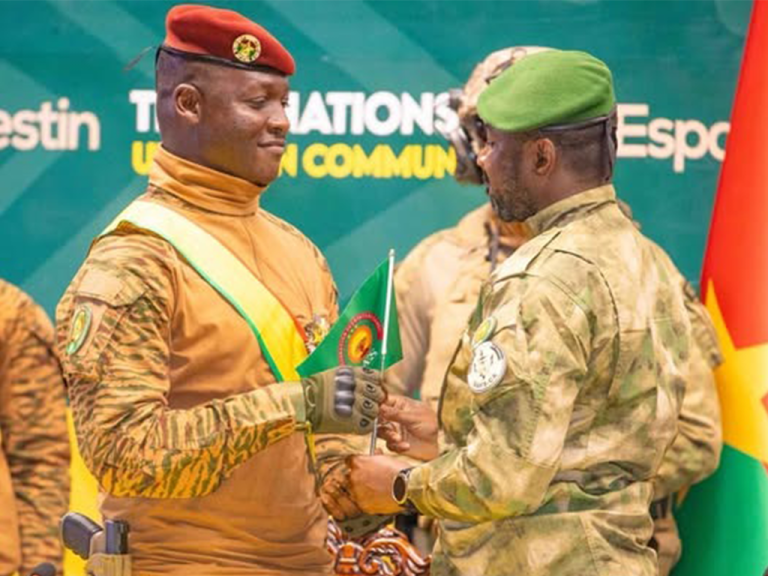
In a Sahel long expected to explain itself rather than act, every political decision now commits more than an agenda it commits a direction. In Bamako on December 23, 2025, the second session of the Heads of State College of the Sahel States Confederation (AES) did not merely mark an institutional handover; it established a milestone in building an unprecedented political project, conceived from the heart of the continent and aimed at reclaiming its capacity for initiative.
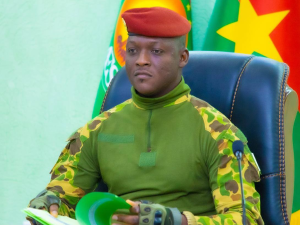
The designation of Captain Ibrahim Traoré to the presidency of the AES Confederation, following the term of General Assimi Goïta, fits within this foundational sequence.
It reflects a shared will to consolidate the confederal structure through responsible leadership, in a context where security emergencies, geopolitical pressure, and the imperative for development demand clear, assumed, and structuring choices.
In passing the baton to Captain Ibrahim Traoré, General Assimi Goïta affirmed a continued commitment to the sovereignist orientation of the AES, while entrusting its immediate future to a figure embodying demands for results, discipline, and political clarity.
Related/ AES: Collective security and assertive sovereignty, the foundations of a new security order in the Sahel
Captain Traoré’s presidency begins during a critical phase in which the Confederation must prove its ability to deliver concrete outcomes: consolidated security, coherent diplomatic coordination, and above all, the structural transformation of Sahelian economies.
The Burkinabe president assumes this role with credibility forged in action, a rare yet incisive voice, and a vision in which state authority is not a slogan, but an architecture to be patiently rebuilt.
His call for the engagement of defense and security forces, diplomats, development actors, and populations is not mere rhetoric. It reflects a lucid understanding that the AES will not survive as a mere alliance of circumstance. It must become a functional political space, capable of aligning security, development, and sovereignty along the same trajectory.
The Traoré presidency thus places collective responsibility at the heart of the confederal project, breaking with the logic of outsourcing solutions.
On a Pan-African level, this transition sends a clear signal: The Sahel intends to think for itself, decide for itself, and build according to its own priorities; not in isolation, but through a strategic reappropriation of its destiny.
Under this presidency, the AES is poised to become a laboratory for state re-foundation, where public action regains meaning, effectiveness, and legitimacy.
By entrusting the reins of the Confederation to Captain Ibrahim Traoré, the member states are making a demanding wager ; one on sober, firm, and essentials-oriented leadership. If this wager succeeds, the Sahel will cease to be an arena for external experimentation and become a space of deliberate political projection.
For history never advances with the hesitant, but with those who dare to set its course.
Neil Camara